How to Get a Playground Grant in Canada: Eligibility, Matching Funds and Timing
A school council applies in February and never hears back. A community league wins $125,000 in March and cannot spend a dollar of it. A non-profit submits a strong August application and gets set aside unread. All three scenarios happened because none of them had worked out how to get a playground grant.
None of the three had a weak playground, or a weak case. Each failed on mechanics instead — eligibility, matching funds and timing. That is where most applications come apart, and where the distance between a funded project and a filed one actually sits.
Finding the programs is the easy part; our playground grants directory lists what is open to Western Canadian projects and what each pays. What follows are the “secret” rules that don’t appear on the form — the ones that decide whether your application survives its first read.
Check Eligibility Before You Check the Amount
Committees usually sort programs by dollar value. Sort them by eligibility instead, because the largest grant you cannot apply for is worth nothing.
Alberta’s Community Facility Enhancement Program offers up to $125,000 through its small stream, and it is the program most Alberta playground projects reach for first. Yet its applicant list is narrower than most committees expect:
- Eligible — community non-profits, registered charities, First Nations and Métis Settlements
- Not eligible — municipalities, for-profit organizations, universities, colleges, private schools and individuals
So a town that wants a new play space cannot apply directly, though the community league that runs the park usually can.
Saskatchewan’s Community Initiatives Fund shows the same limitation from a different angle. Its Community Grant Program pays up to $35,000 for local programs, which sounds ideal until you reach the exclusions: capital expenses covering construction and playgrounds specifically cannot be funded. It pays for programming, not structures.
Three questions settle eligibility quickly:
- Does the program fund capital construction, or only operations and programming?
- Does your organization type appear on the eligible list in its own name, rather than by implication?
- Could an eligible partner apply on your behalf if you do not qualify yourself?
Answer those before you write anything. A playground grant application that fails on eligibility never reaches a reviewer who could have been persuaded by the project.
How to Get a Playground Grant When No Program Funds the Whole Thing
This is the mechanic that surprises committees most. Almost every meaningful program pays a portion and expects you to fund the rest:
- CFEP, Alberta — the applicant must contribute an amount equal to or exceeding the grant request, which caps provincial money at half the project
- Capital Project Grants, British Columbia — up to $250,000, but only 20 to 50 per cent of total cost, and applicants must demonstrate the matching funds already exist
- School Playground Equipment Grant, Saskatchewan — up to $50,000 per school, again as matching funds, with one application per school per year
The pattern holds across the country, so plan around it. You need money before you can get money, and the playground grant is the last piece of the budget rather than the first.
Two consequences follow:
- Fundraising starts before the application, not after the cheque arrives.
- “We will fundraise the rest” is not a matching plan. Reviewers read it as exactly the risk it is. Pledged funds, a council resolution or money already banked all count. Optimism does not.
A grants directory earns its keep here as a planning tool rather than a wish list. Read the match requirement beside each maximum, then add the two together. That total, not the headline grant, is what your project actually costs you to unlock.
Some Grants Are Gates to Other Grants
A few programs sit behind other programs, and missing that sequence costs you a full year.
British Columbia’s Capital Project Grants illustrate this well, because the capital application is genuinely a second step:
- Secure the qualifying grant first — an approved Community Gaming Grant, or a PAC and DPAC Grant
- Apply during the summer window — the 2026 intake ran from July 17 to August 31
- Wait for the decision, which arrives by December 31
A group that discovers step one in August has already lost the year.
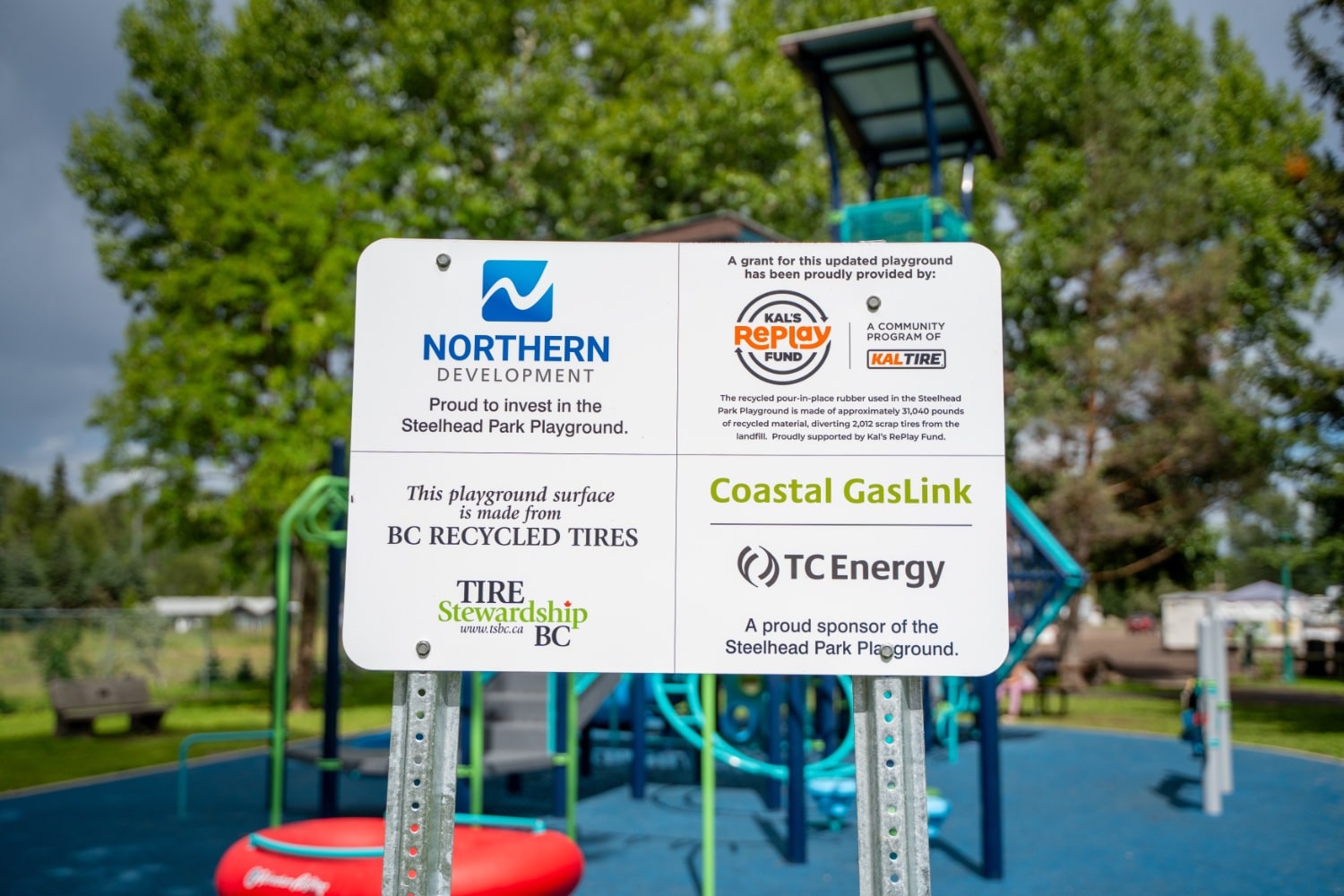
Federal and corporate programs stack differently. The Enabling Accessibility Fund offers grants up to $200,000 for small construction projects and names accessible playgrounds as an eligible example, which makes it a natural companion to a provincial capital grant rather than a competitor. Component programs work the same way: Kal’s RePlay Fund covers recycled rubber infrastructure specifically, so it pays toward protective surfacing rather than the whole structure, and applications reopen in the first week of January.
Before assuming two playground grants combine, confirm whether each program counts other grant money toward your required contribution. Programs differ on this, and the answer changes your budget entirely. Stacking a federal accessibility grant on a provincial capital grant works cleanly for some committees and disqualifies others, purely on how each funder defines your contribution.
How to Get a Playground Grant in Time for a Summer Build
Work backward from when children need to be playing, because prairie frost decides your installation window regardless of when the money lands. The published timelines can help you set your project’s schedule:
- Alberta’s CFEP runs three intakes a year — January 15, May 15 and September 15 — and notifies applicants roughly six months later, in July, November and March
- BC’s Capital Project Grants notify by December 31 for a window that closed at the end of August
- Saskatchewan’s School Playground Equipment Grant ran from September 9, 2025 to February 25, 2026 on a first-come, first-served basis, which rewards early applicants rather than polished late ones
So a September CFEP application produces a March decision and a summer build. Layer equipment lead times and a frost-closed construction season on top, and 9 to 12 months between application and ribbon-cutting is normal.
Consequently, a committee that wants children playing next summer should already be assembling this year’s application. Knowing how to get a playground grant matters far less than starting early enough to use one.
Why Playground Grant Applications Get Rejected
Reviewers see the same failures repeatedly, and almost none of them concern the playground itself:
- Ineligible applicant type — the single most common cause, and entirely avoidable
- Matching funds unconfirmed — a plan to fundraise rather than evidence of funds
- Capital costs in a programming grant, or the reverse
- A lump-sum price that reviewers cannot break down or compare
- Vague community benefit — reviewers want counts, examples and demonstrated need, not adjectives
- Missing accessibility rationale, which increasingly decides tie-breaks and matters most for inclusive playgrounds
- No maintenance plan, since funders dislike building something nobody will maintain
- Late or incomplete submission, which staff cannot rescue on your behalf
Fix the first three and you clear the bar that stops most applications. Much of how to get a playground grant comes down to exactly that: a better-assembled file rather than a better playground.
Confirm Every Program Detail at the Source
Grant programs end quietly. Co-op Community Spaces funded more than 200 community projects over eleven years, then closed in early 2026 with little announcement. Round-ups and blog lists across the sector can take a year to catch up, so a playground grant that closed last spring will still turn up in search results this autumn.
Make the funder’s own page your first stop, and confirm four things before you invest any writing time:
- The intake dates for the current cycle, rather than last year’s
- The maximum, which funders revise more often than committees expect
- The match — both the percentage and what the funder accepts as your contribution
- The eligible applicant types, checked against your organization’s legal status
Use directories to discover programs and the funder’s page to confirm their rules. That habit costs ten minutes and prevents the most avoidable rejection there is.
How to Get a Playground Grant Without Hiring a Grant Writer
Committees often ask how to get a playground grant without paying someone else to write the application. Most can. Professional grant writers charge roughly $500 to $2,000 per application, which is money well spent on a large submission. Smaller applications rarely need one, provided you supply what reviewers actually score.
Most of that material comes from your supplier rather than your committee:
- An itemized quote separating equipment, surfacing, installation and site preparation, which answers the budget questions directly
- Drawings and a site plan, which demonstrate the project is real rather than aspirational
- CSA Z614 compliance and certified crews, which answer the risk questions before a reviewer raises them
- Reference projects, which show the same work delivered elsewhere
Assembled properly, that package answers roughly two-thirds of a playground grant application before you write a sentence of narrative.
Canadian Recreation Solutions has spent forty years helping communities in Alberta, British Columbia and Saskatchewan assemble this exact package, and our completed projects show what funded applications turned into. If you would like a quote structured for a grant application rather than a purchase order, talk to our team. We will build the numbers your reviewers need, and help you sequence the applications so the funding lands before the ground opens.