Playground Equipment for Small Spaces: Designing Play Areas Under 1,500 sq ft
Choosing playground equipment for small spaces starts with a surprise: a 1,500 sq ft site holds far less play equipment than it appears to. Once the required safety zones come off the top, most small sites have well under half their area left for the equipment itself.
That constraint shapes every decision that follows. It decides which structures fit, whether swings are possible at all, and how much of the budget goes to surfacing rather than play. We see it constantly on infill parks, condo and HOA common areas, daycares, hotels and campgrounds across Western Canada.
The good news is that a small footprint rarely means a dull playground. It means planning the space before choosing the equipment, and this guide walks through how.
Minimum Space Required for a Playground
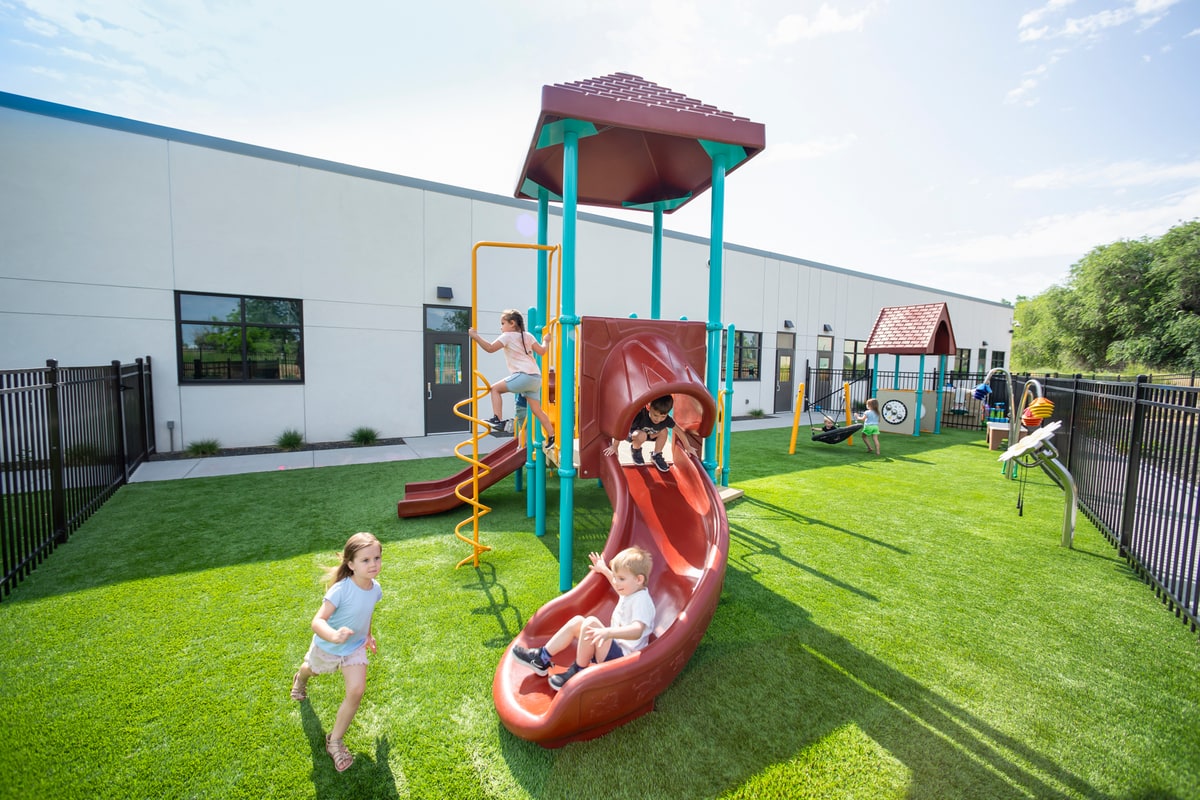
The minimum space required for a playground is not the size of the equipment. It is the equipment plus the clear, surfaced zone around it that CSA Z614, the Canadian playground standard, requires so a child who falls or jumps lands safely.
For most stationary equipment, that zone extends 1.8 m (6 ft) in every direction. Moving equipment needs more, and slides need extra clearance at the exit. The table below summarizes common requirements based on CSA Z614 guidance:
| Equipment | Minimum clear zone |
|---|---|
| Play structures, climbers, stationary pieces | 1.8 m (6 ft) on all sides |
| Slide exits | 1.8 m surfaced zone, plus 1.8 m further clear space in front |
| To-fro swings | Twice the chain length, in front and behind |
| Spinners up to 1.0 m across | 1.8 m (6 ft) |
| Spinners over 1.0 m across | 2.7 m (9 ft) |
| Distance to fences, buildings and trees | About 1.8 m (6 ft) |
Now apply that to a real site. A 30 × 50 ft lot is exactly 1,500 sq ft. Take 6 ft off every side, and the area left for equipment is 18 × 38 ft, or 684 sq ft. So on a typical small site, less than half the ground can hold play equipment at all, and a slide exit or a spinner shrinks it further.
Two habits keep that math honest. First, measure zones from the outermost point of each piece, such as a slide’s end, rather than from its posts. Second, ask for the manufacturer’s use-zone drawing for every product you consider, because those drawings show the exact clear area that piece needs. Your designer should still confirm each layout against the current edition of CSA Z614.
How to Choose Playground Equipment for Small Spaces
Because the footprint is fixed, the goal is more play per square foot. Four principles do most of the work:
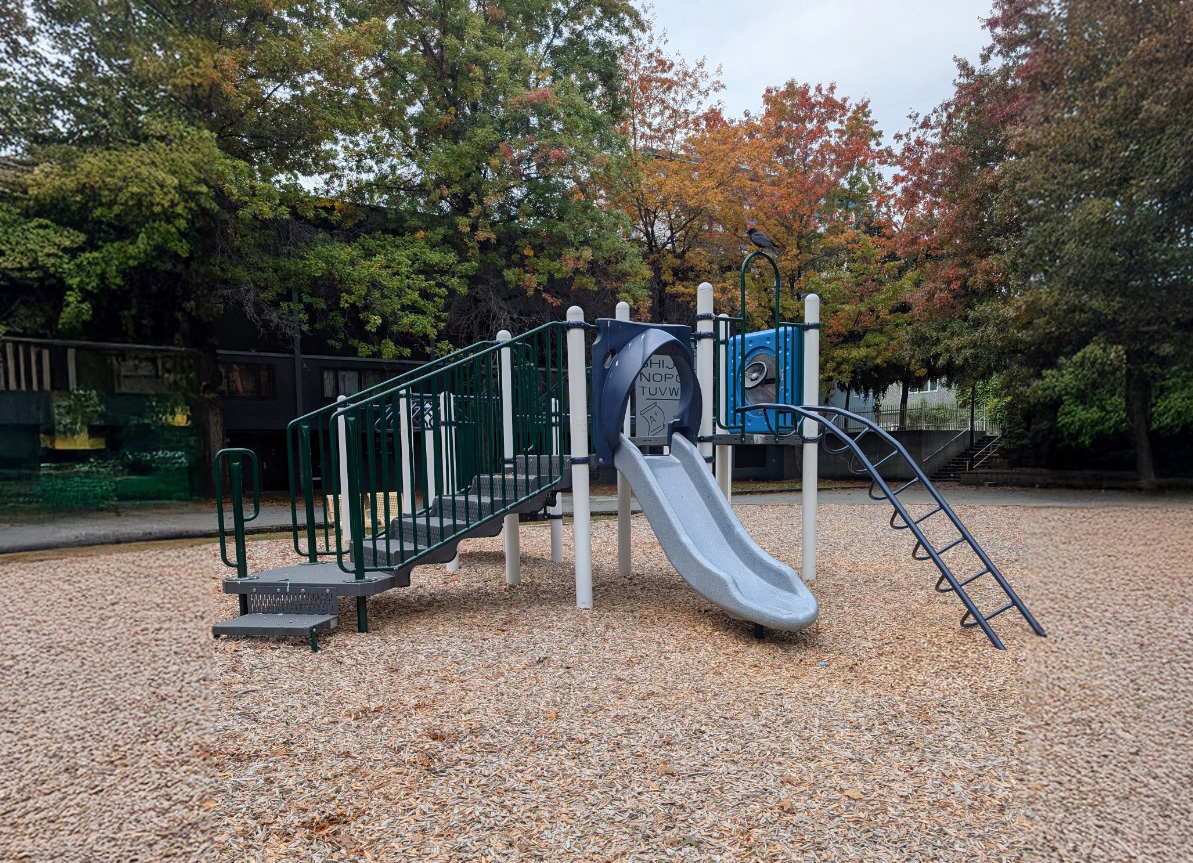
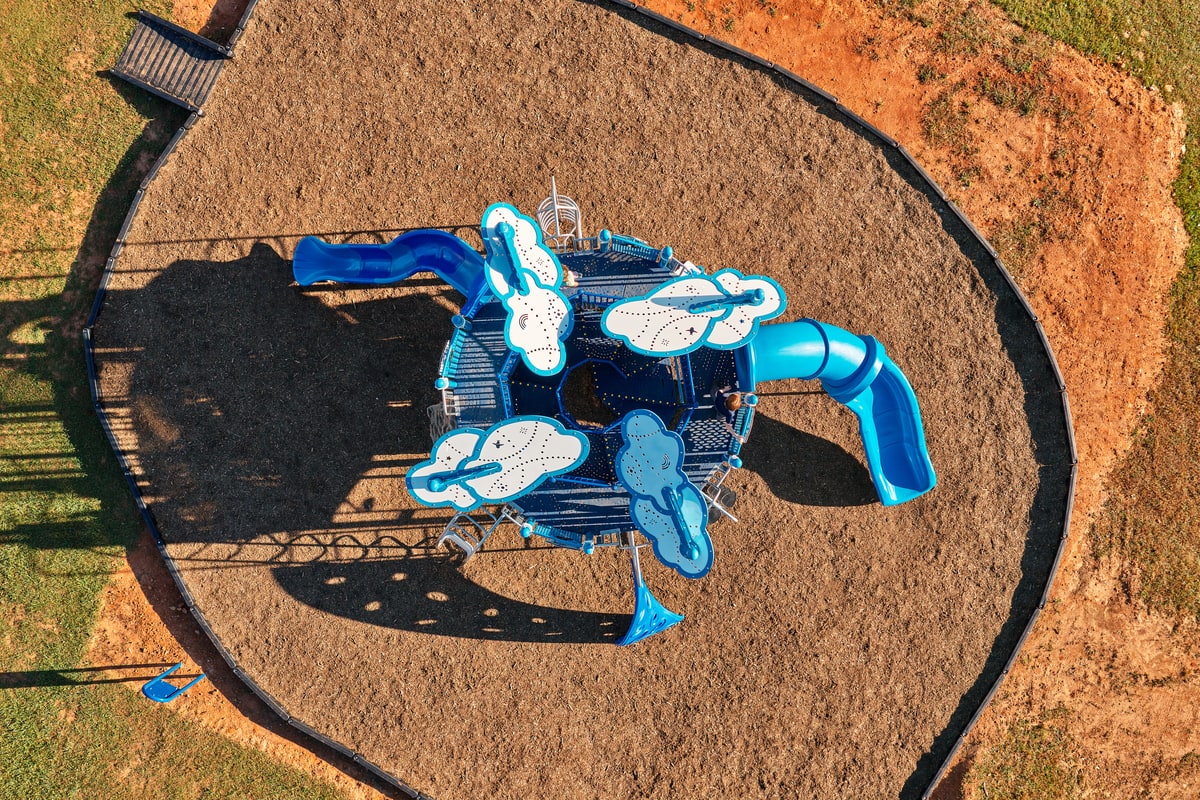
- Build up, not out. Towers, climbing walls and overhead elements add play value without adding footprint, and they need the same 1.8 m zone as a low structure.
- Choose multi-activity structures. One compact structure with slides, climbers and panels outperforms several freestanding pieces, since each freestanding piece brings its own zone.
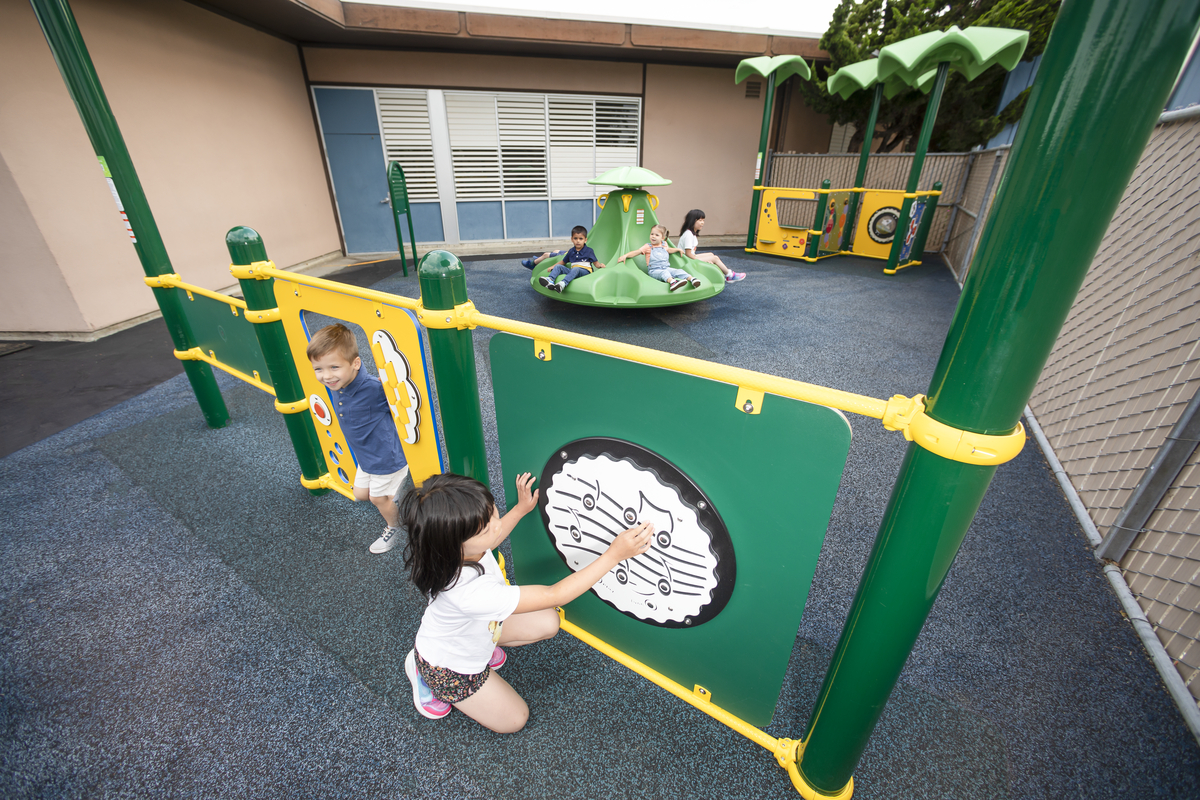
- Put play at ground level. Activity panels, music elements and under-deck pretend play add variety while using space inside the structure’s existing footprint.
- Pick one primary age group. Separate 2–5 and 5–12 areas can nearly double the space required, so most small sites serve one age group well rather than two poorly.
Before shortlisting any playground equipment for small spaces, compare each structure’s published use-zone dimensions with your measured area. A structure that looks compact in a photo can still carry a zone that will not fit.
Little Tikes Commercial’s guide to playsets for small spaces shows several compact structures built around these principles, and it makes the same first point we do: measure the site before choosing equipment.
Small Playground Design Moves That Save Space
Beyond the equipment itself, small playground design comes down to a handful of layout decisions:
- Share clear space where the standard allows. Adjacent pieces can often share a single no-encroachment zone, although each still needs its own surfaced zone.
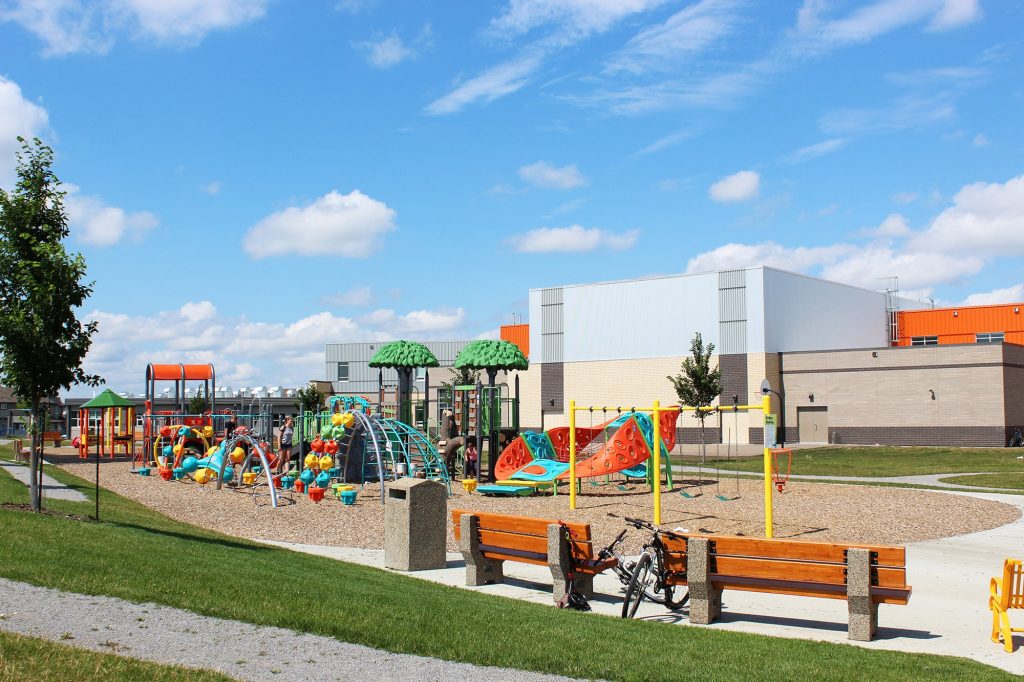
- Keep paths and seating outside the zone. Benches inside the surfaced area waste it, while seating along the edge gives caregivers a clear view.
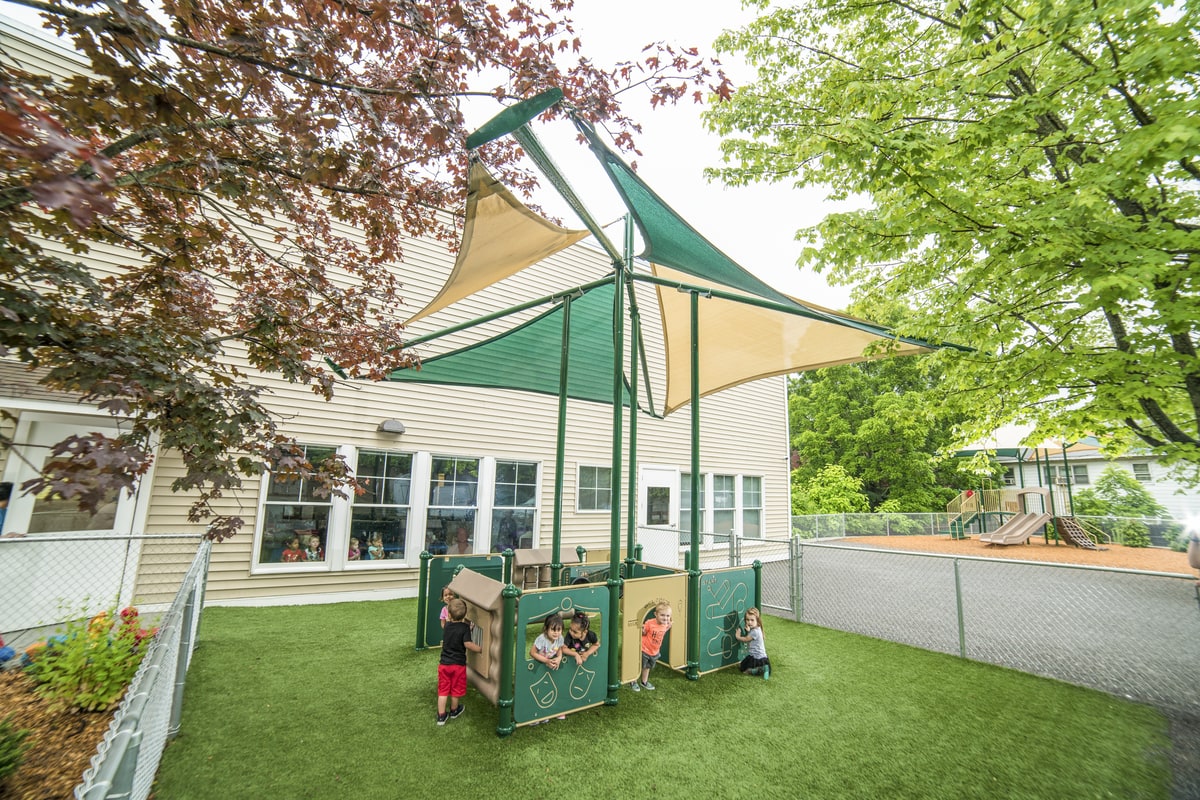
- Use the structure for shade. A roof element over the deck shades children without claiming ground space, whereas a freestanding shade structure needs a footprint of its own.
- Keep sightlines open. Supervision matters more on a compact site, where children move quickly between elements.
Miracle Recreation’s guide to planning a playground with limited space adds a useful idea: divide even a small site into micro-zones for different types of play, so the space feels larger than it measures.
Playground Equipment for Small Spaces: What to Leave Out
Some equipment simply does not suit a small footprint, and knowing that early saves a redesign.
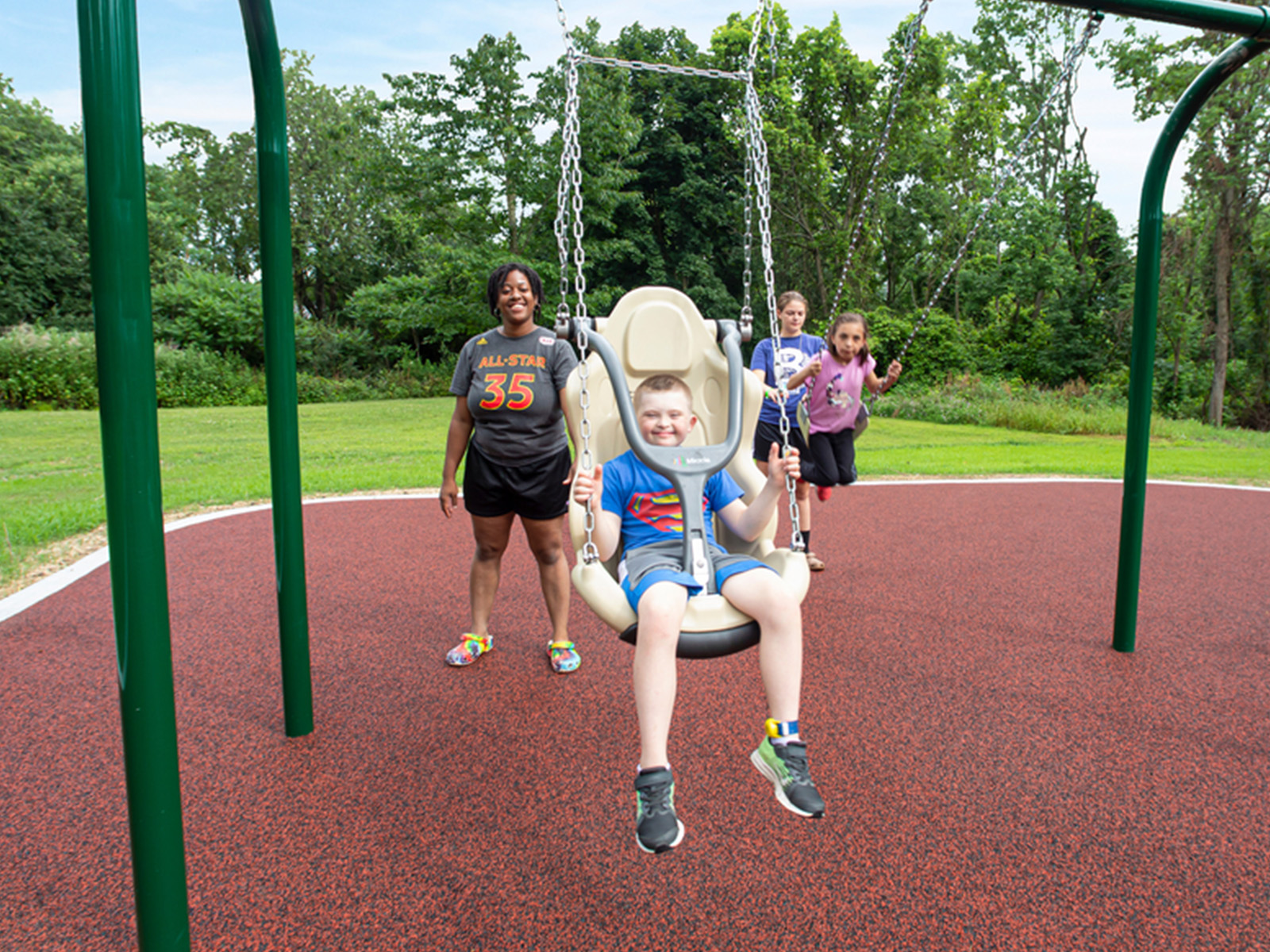
Traditional swings are the biggest space consumer. A swing with 7-foot chains needs about 14 feet of clear surfacing in front and 14 behind, which is 28 feet of depth before the frame itself. On a 30-foot-wide site, that leaves almost nothing for anything else. If swings matter to your community, a single accessible swing seat may fit where a full bay will not.
Large spinners are the second. A spinner more than 1.0 m across needs a 2.7 m zone, while a smaller one needs only 1.8 m. For this reason, choosing the smaller model can free up several square metres.
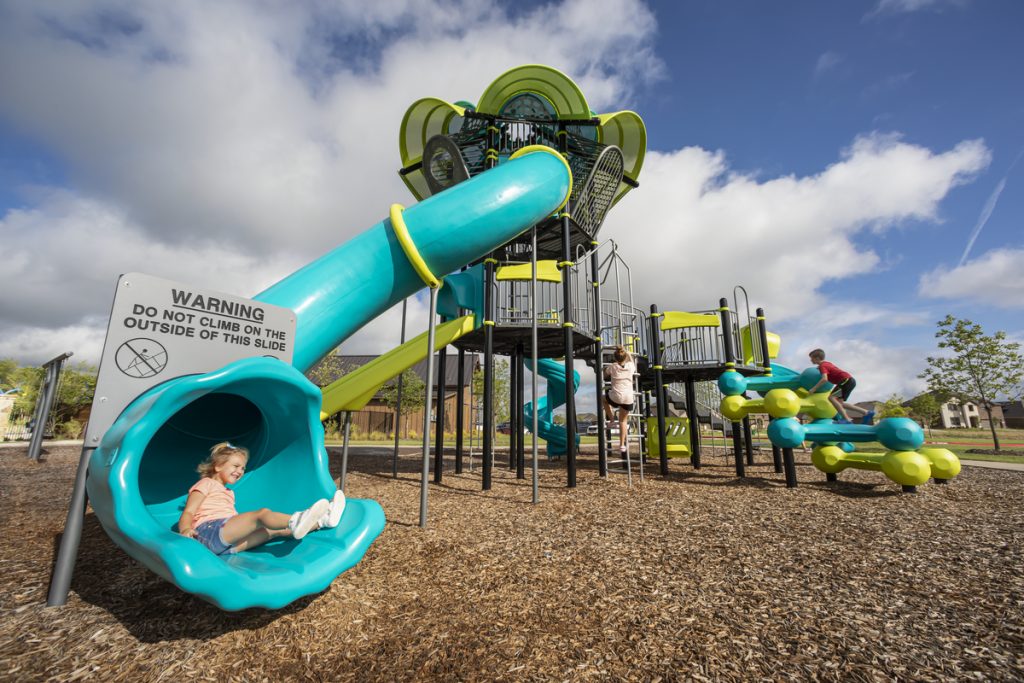
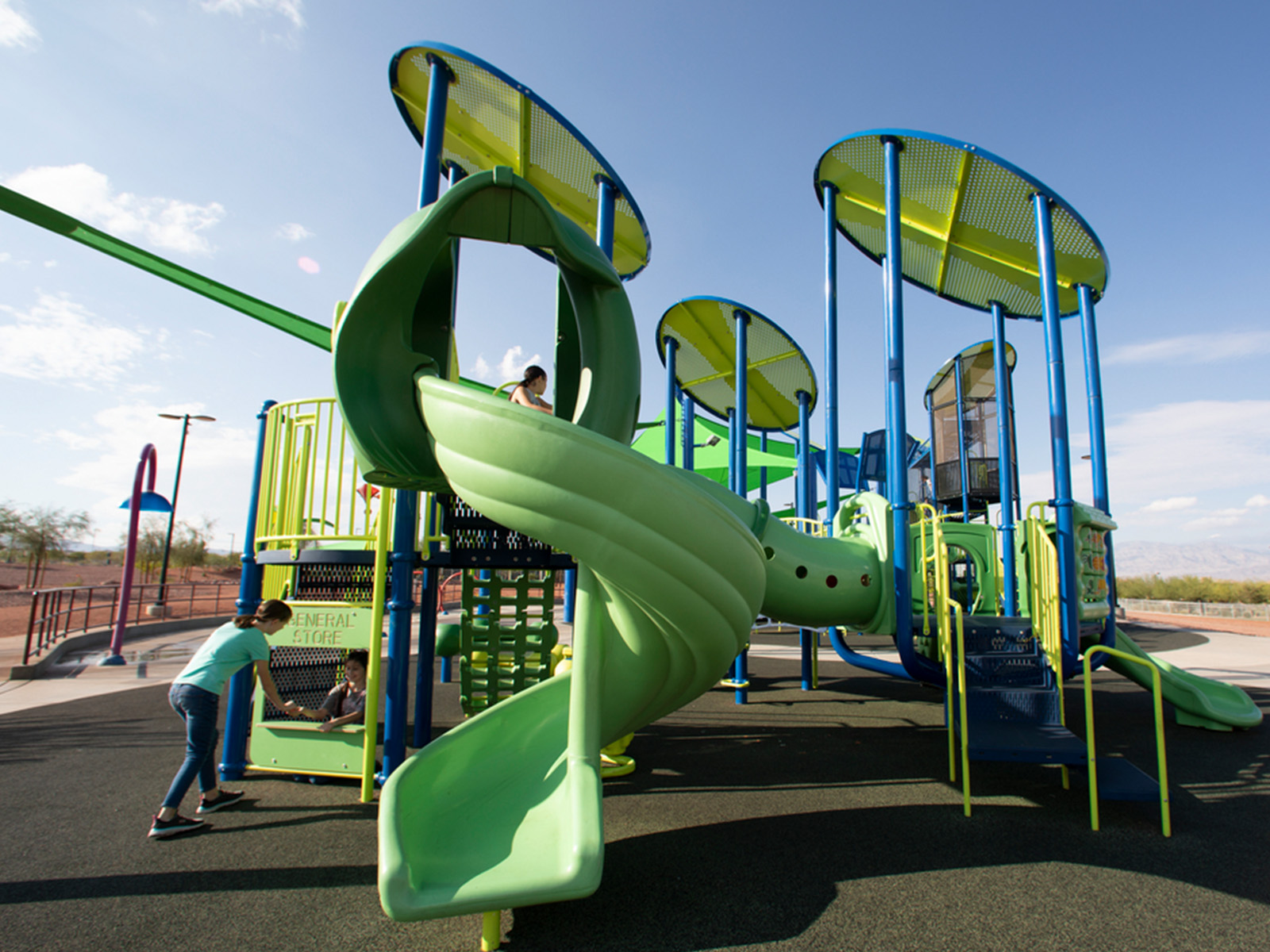
Long straight slides use more ground than they seem to, because the exit zone extends well beyond the end of the slide. A spiral or tunnel slide, by contrast, wraps the same drop into a tighter footprint.
Several small freestanding pieces also tend to cost more space than they add, since every piece needs a separate zone.
Common Mistakes on Small Playground Sites
Most problems on compact projects trace back to decisions made before the equipment arrives. These are the ones we see most often:
- Measuring the lot instead of the usable area. Setbacks, buried utilities, drainage paths and property lines can all reduce the space you actually have.
- Pushing the structure against a fence. The fence still needs its own clearance, so the structure ends up no closer to the edge than it would anyway.
- Forgetting installation access. Crews and equipment need a route onto the site, which is especially important for infill lots between buildings.
- Ignoring snow storage. On a small playground site, plowed snow often lands on the play area unless you plan somewhere else for it.
Each of these is easy to solve during design, but expensive to fix after installation. That is why a measured site plan should come before any decisions about playground equipment for small spaces.
Playground Ideas for Small Parks and Constrained Sites
Different sites call for different priorities. These playground ideas for small parks and similar sites reflect what usually works:
- Pocket parks and infill lots benefit from one strong structure and good seating. Miracle Recreation’s guide to creating a pocket park covers the community side of these projects well.
- Condo and HOA common areas need low-maintenance equipment that residents of all ages can supervise from nearby.
- Daycares should confirm provincial licensing requirements for outdoor space before design begins, since licensing may set a larger minimum than the site suggests.
- Hotels and campgrounds often favour a single themed structure that reads well from the parking lot or pool deck.
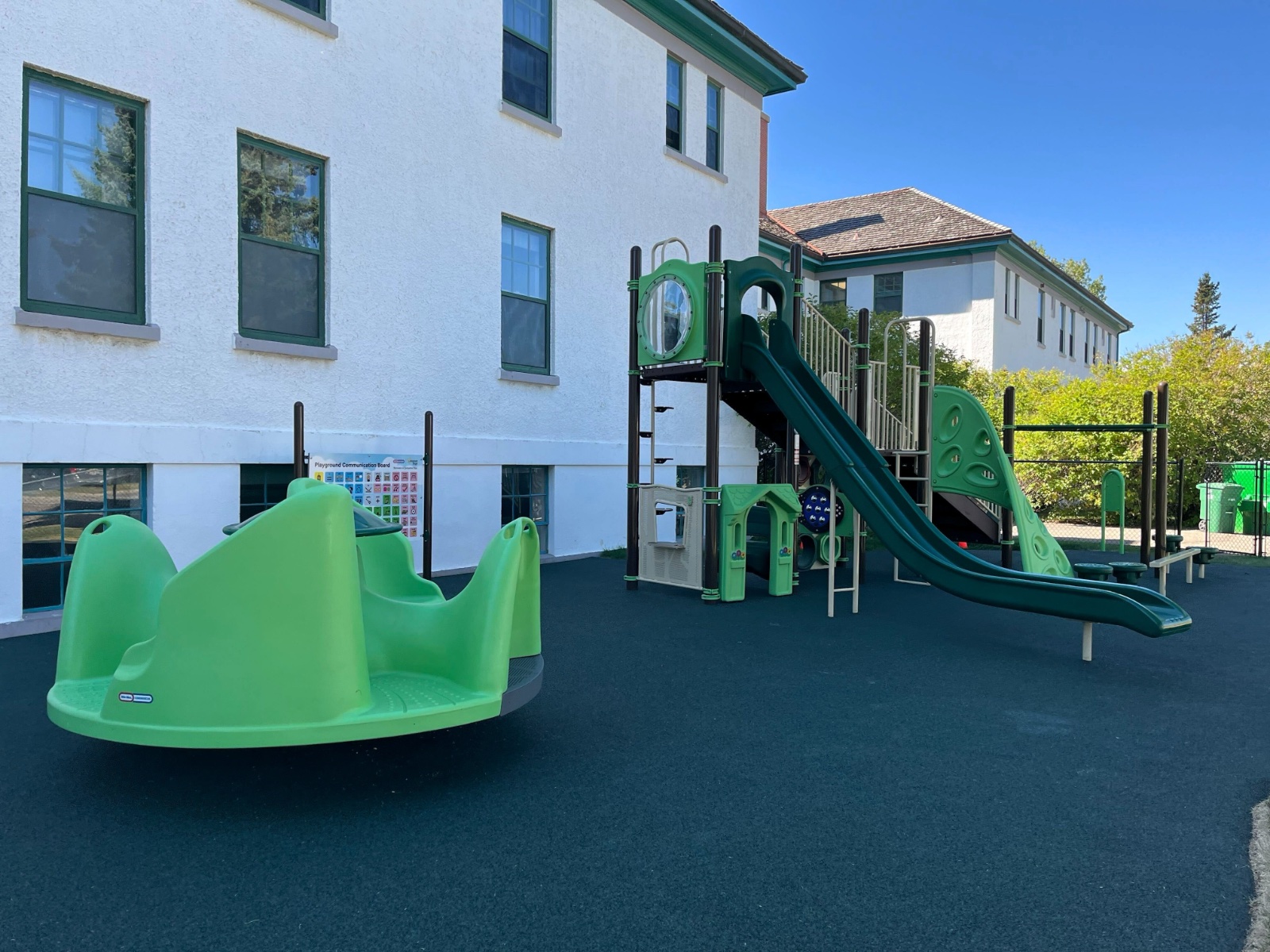
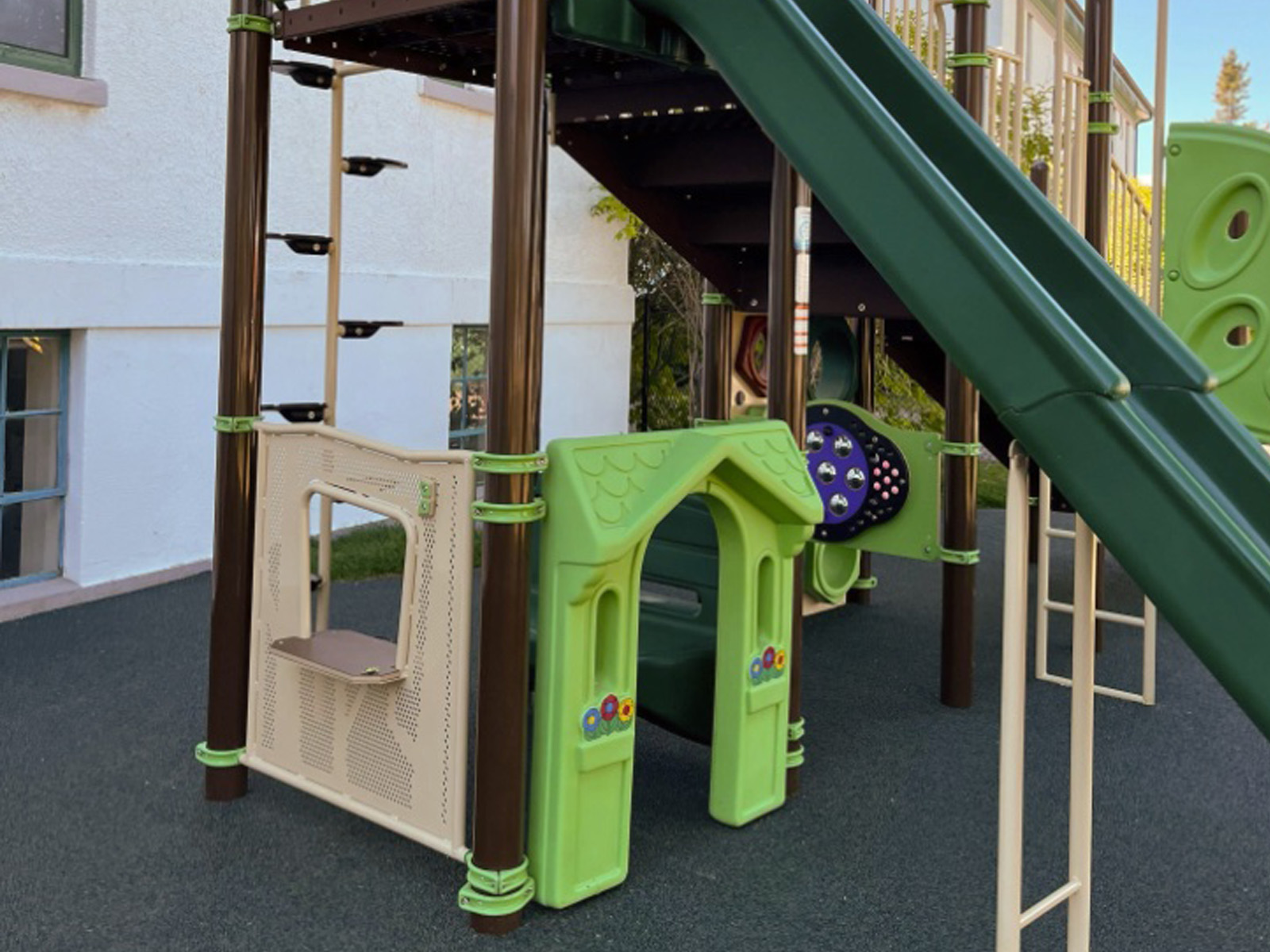
A single, well-chosen structure can serve a whole school community. At New Heights School in Calgary, we designed one structure with accessible-height panels, an under-deck play area and a communication board, and it serves students with a wide range of needs.
Surfacing and Accessibility on a Tight Footprint
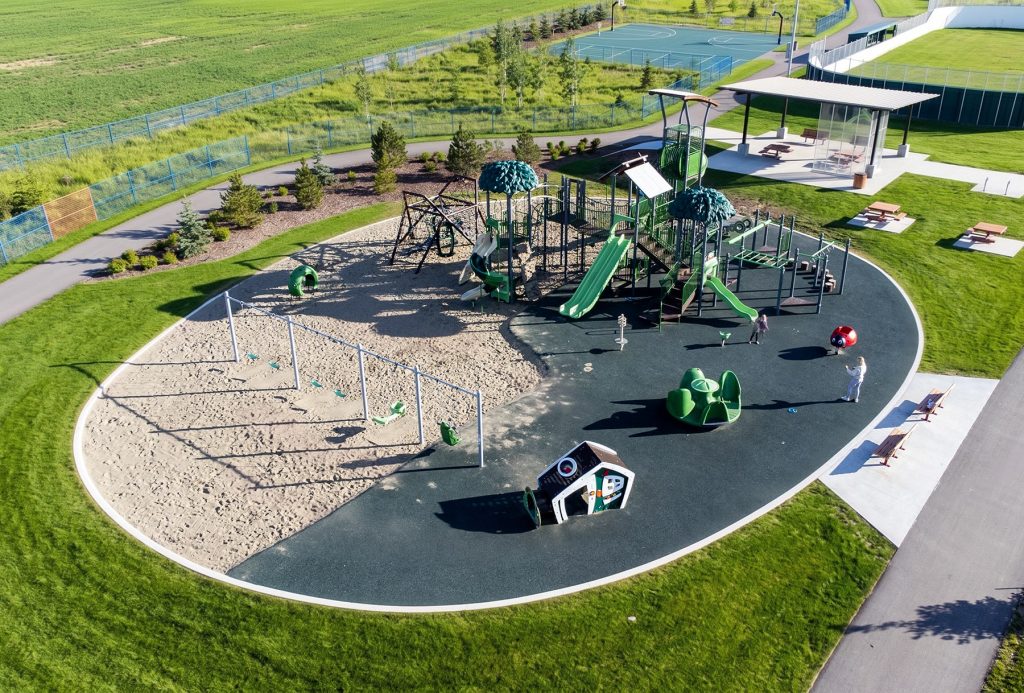
On a small site, surfacing covers almost the entire area, so the choice matters more than usual. Protective surfacing such as poured-in-place rubber creates a firm, level surface that wheelchairs and walkers can use, while engineered wood fibre costs less upfront and needs regular topping up. Loose-fill surfacing also needs a containment border, which takes a few more inches from an already tight site.
Drainage deserves attention too. On a compact lot, water that pools on the play area has nowhere else to go, so plan the grade before the surfacing goes down.
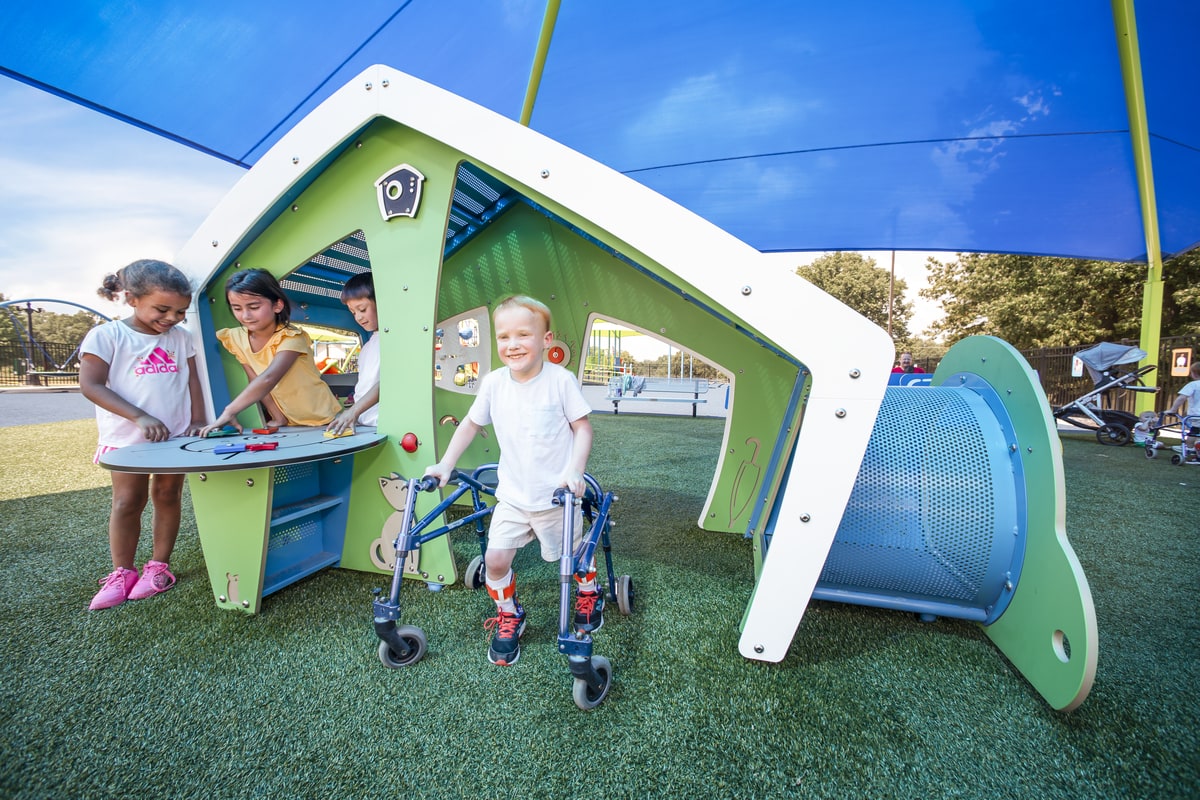
Accessibility still applies on a small site. A ramped entry, a transfer station and ground-level play keep the space open to more children, and our inclusive playgrounds page explains how those pieces work together.
Planning Playground Equipment for Small Spaces With a Site Assessment
The best playground equipment for small spaces is the equipment that fits your actual site, with every clear zone drawn in before anything is ordered. That is why we start small projects with a site visit and a measured layout rather than a catalogue page.
If you are working with a compact site, request a site assessment from our team. We will measure the space, show you what fits and help you get the most play out of every square foot. You can also see more of our completed projects or learn about our playground design service.