Playground Surfacing Options: The Complete Comparison Guide
Two playgrounds can share the same play structure and still cost very different amounts to build and maintain. The difference sits underneath. Your choice among playground surfacing options decides how far a child can safely fall, who can reach the equipment, and how much time your crews spend raking, topping up and repairing for the next decade or more.
It is also one of the largest lines in the budget. Protective surfacing typically accounts for 20 to 30 percent of a commercial playground project, so the decision deserves as much attention as the equipment itself.
This guide compares the six main surfaces we supply to municipalities, schools, daycares and community groups across Western Canada. You will see how each one performs, what it costs to maintain, and where it fits best.
What Playground Protective Surfacing Has to Do
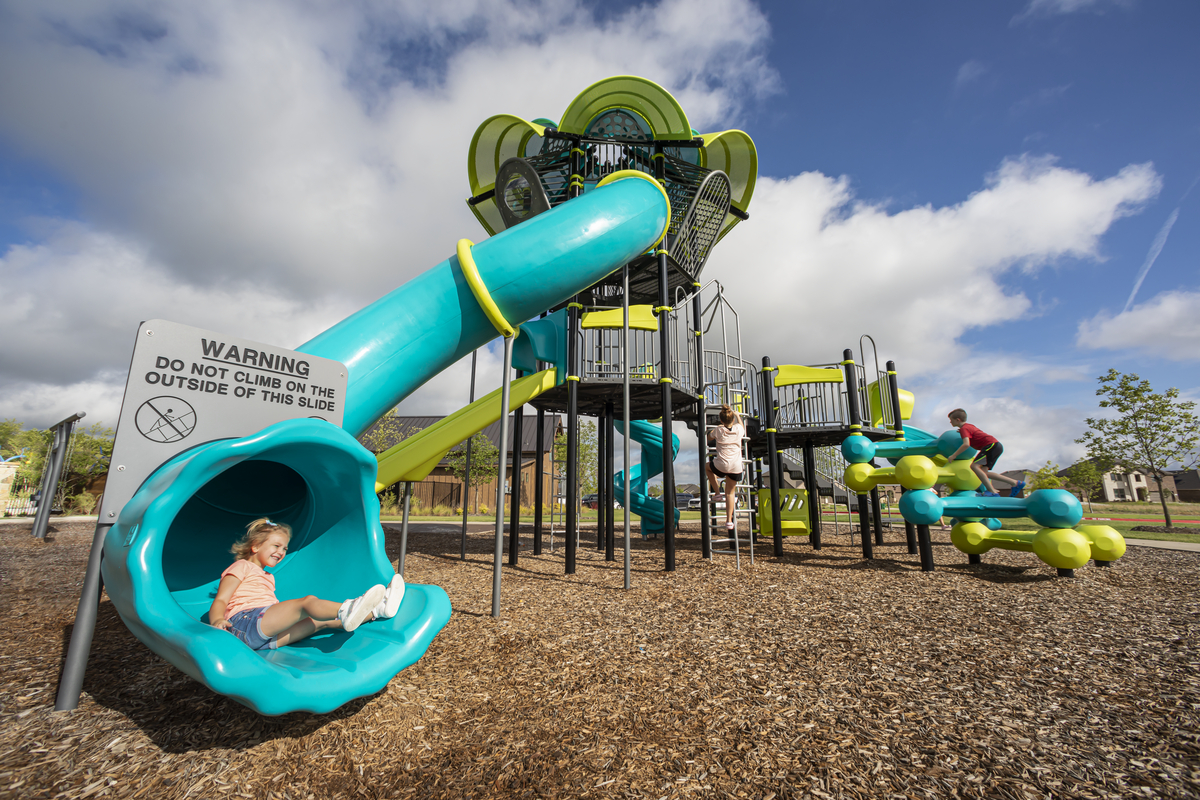
All of these playground surfacing options share the same core job: absorb the impact of a fall. CSA Z614, the Canadian standard for playground equipment and surfacing, requires protective surfacing throughout the zone around each piece of equipment.
Three factors drive the specification:
- Fall height. The tallest play surface sets how much protection the surfacing has to provide. CSA Z614 requires the surface’s critical height, the highest fall it can safely absorb, to at least match it.
- Tested performance. Manufacturers test their surfacing against the impact limits in CSA Z614, and IPEMA offers third-party certification. Before the playground opens, CSA Z614 also requires a comprehensive inspection, and a third-party inspector typically tests the installed surfacing against its fall height requirements.
- Depth. Loose fill only protects at the right depth. CSA Z614 recommends a minimum compacted depth of 300 mm (about 12 inches) for most loose-fill materials, so installers place extra to allow for settling.
Playground Surfacing Options at a Glance
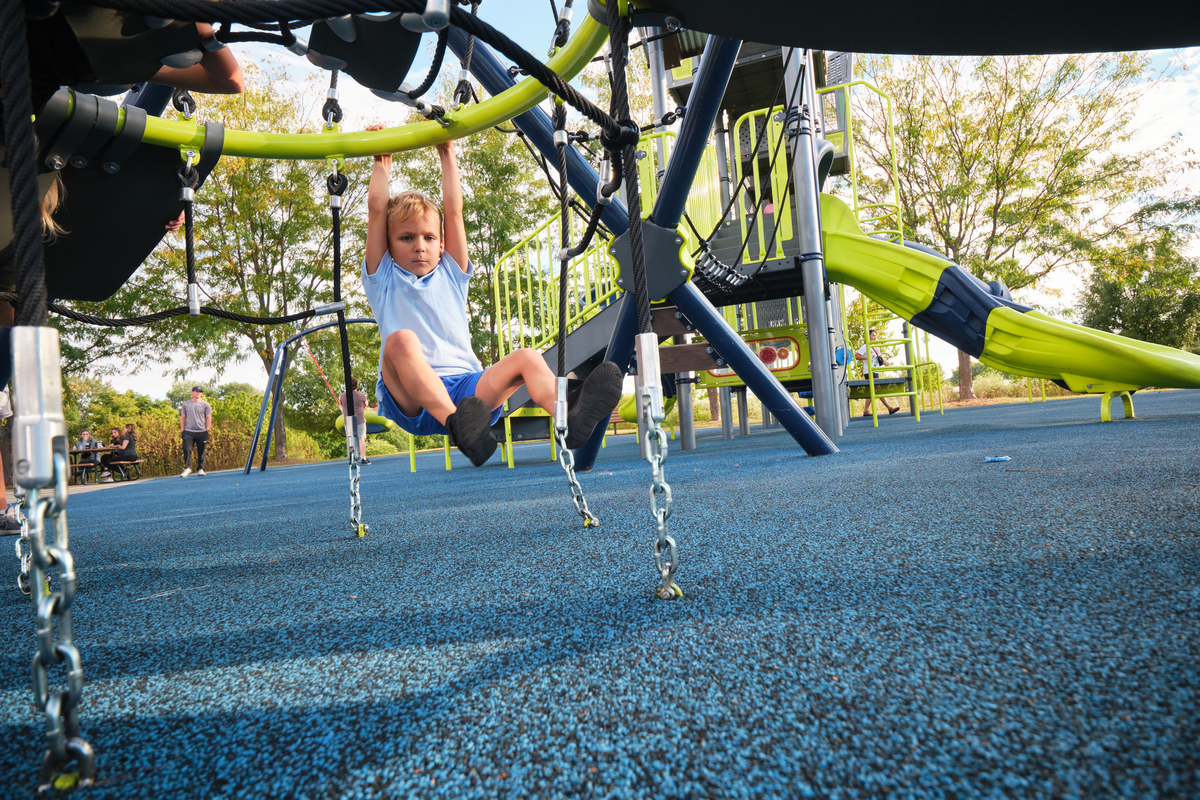
All playground protective surfacing falls into two families. Unitary surfaces bond into one continuous layer, while loose-fill surfaces consist of small pieces that shift underfoot.
| Surface | Type | Wheelchair access | Upfront cost | Ongoing upkeep |
|---|---|---|---|---|
| Poured-in-place rubber | Unitary | Excellent | High | Low |
| Artificial turf | Unitary | Excellent | High | Low |
| Rubber tiles | Unitary | Excellent | High | Medium |
| Engineered wood fibre | Loose fill | Limited | Low | Top-ups every 3–5 years |
| Sand | Loose fill | Poor | Low | Top-ups every 1–3 years |
| Pea gravel | Loose fill | Poor | Low | Top-ups every 1–2 years |
The top-up intervals come from CSA Z614’s own comparison of surfacing materials. Little Tikes Commercial’s overview of playground surfacing uses the same two families.
Unitary Playground Surfacing Options
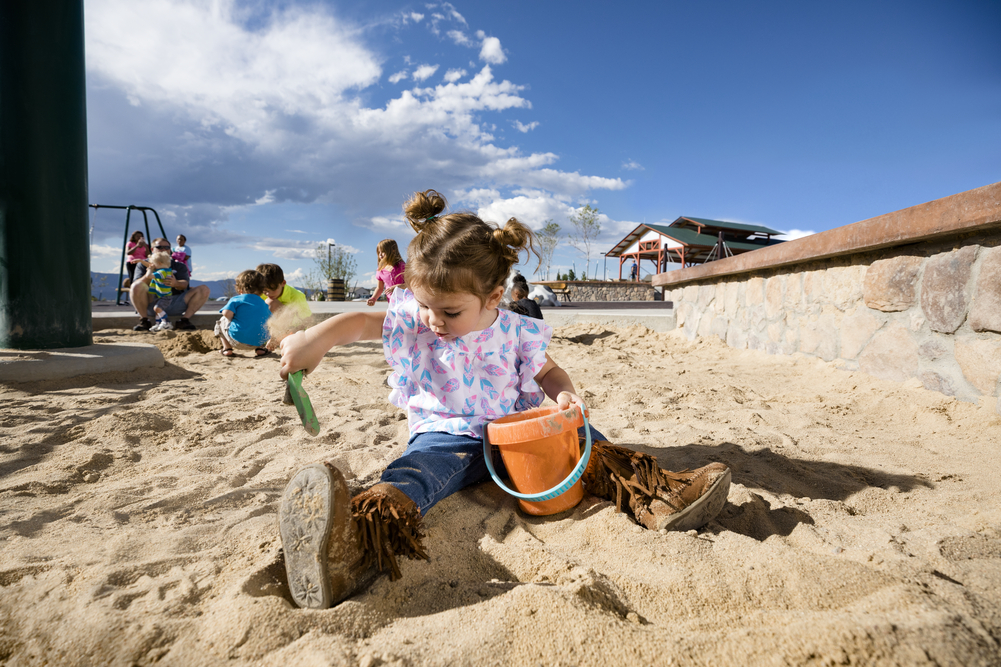
Unitary playground surfacing options cost more to install, but they ask less of your maintenance crews afterward.
Poured-in-place rubber is installed as a smooth, bonded layer, often made from recycled tires. It lasts the longest of any surface we supply, resists slipping, and gives wheelchairs and walkers a firm, level route to every piece of equipment. It also comes in a wide range of colours, and a colour resin finish can match a theme or a brand palette. However, it carries the highest upfront cost and needs professional installation.
Rubber tiles deliver similar accessibility and shock absorption in interlocking pieces. Because you can replace a single damaged tile instead of patching a whole surface, they can save money over the long term. Like poured rubber, they cost more upfront and need a trained crew. However, weeds, roots and freeze-thaw cycles can shift tiles and open gaps between them, so they need more upkeep.
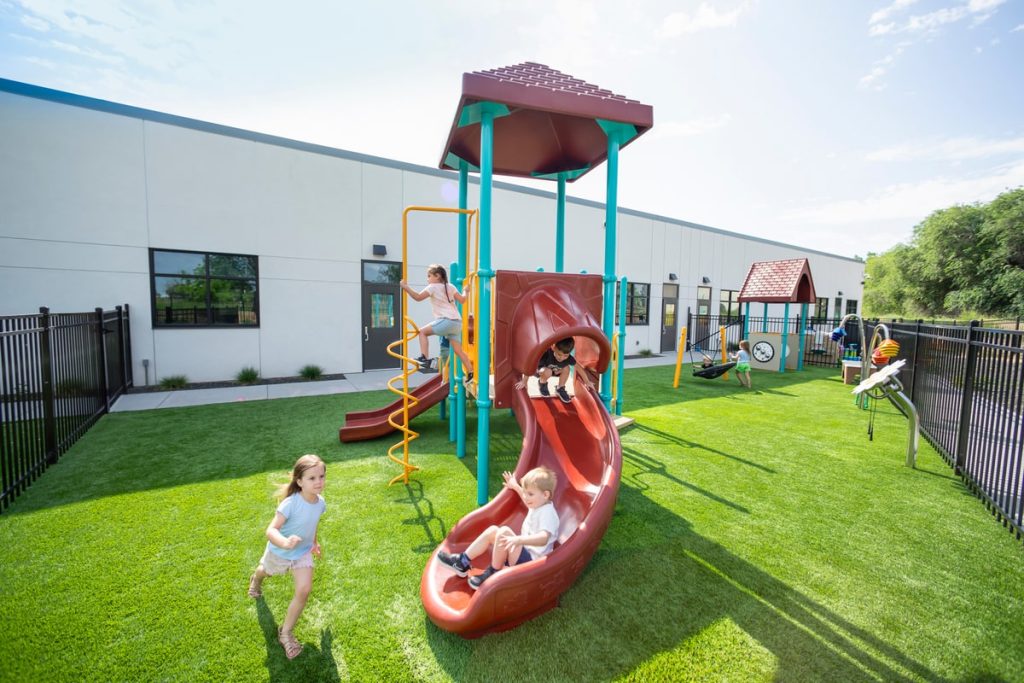
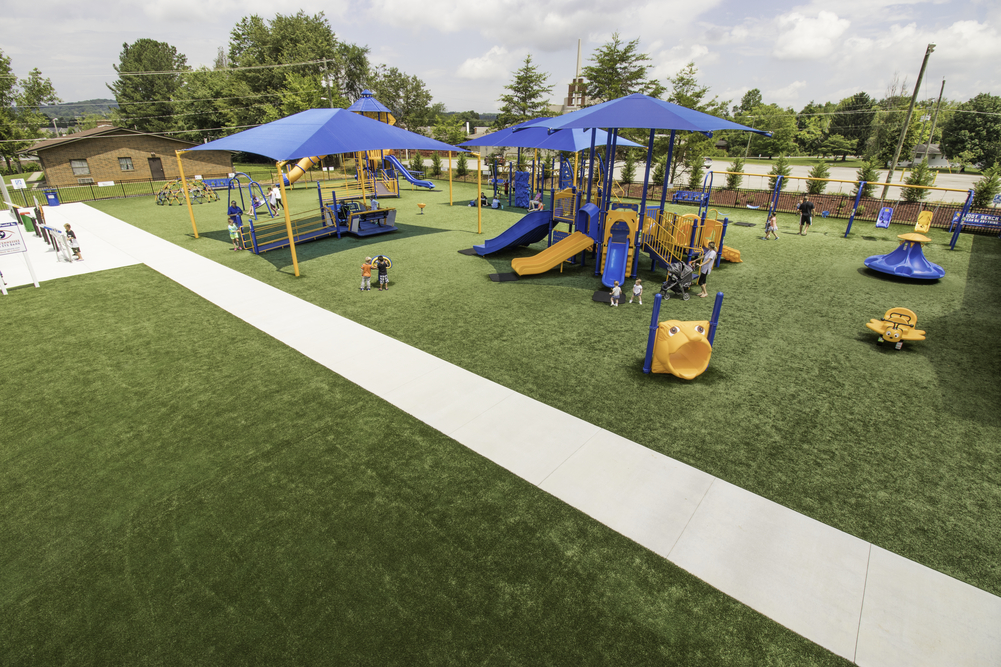
Artificial turf looks like natural grass, feels soft underfoot and dries quickly after rain. It also suits mobility devices, so it works well where a park wants a green, natural look without loose fill. While it is considered low maintenance, turf comes in rolls, so larger play areas have seams joined with tape and adhesive. Heat and heavy foot traffic can stress those seams over time, so they need periodic inspection.
Loose-Fill Playground Surfacing Options
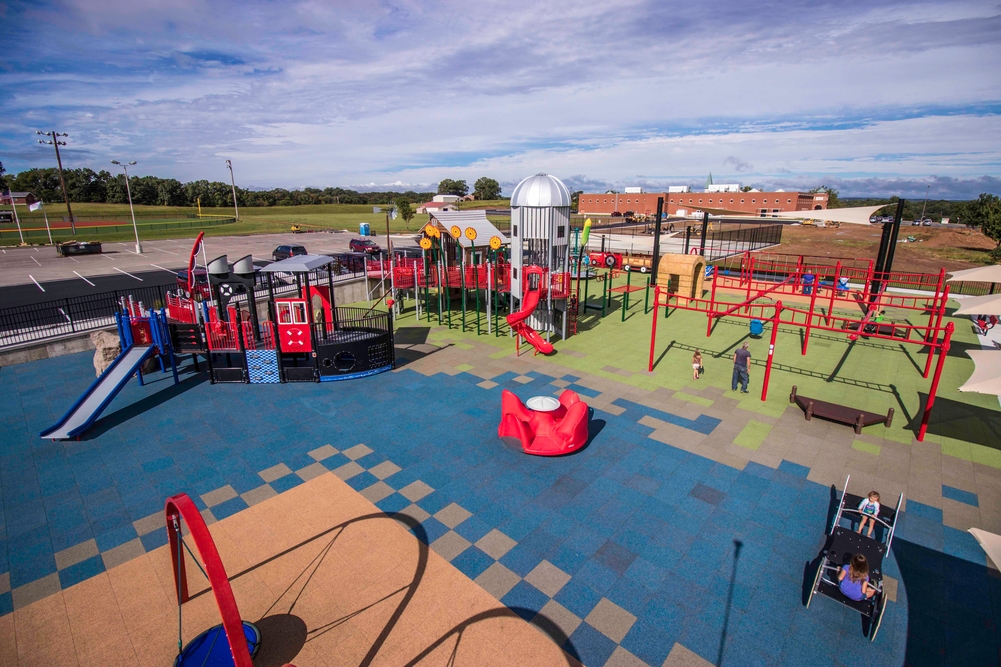
Loose-fill playground surfacing options cost far less to install. As a result, they remain the most common choice on large sites and tight budgets.
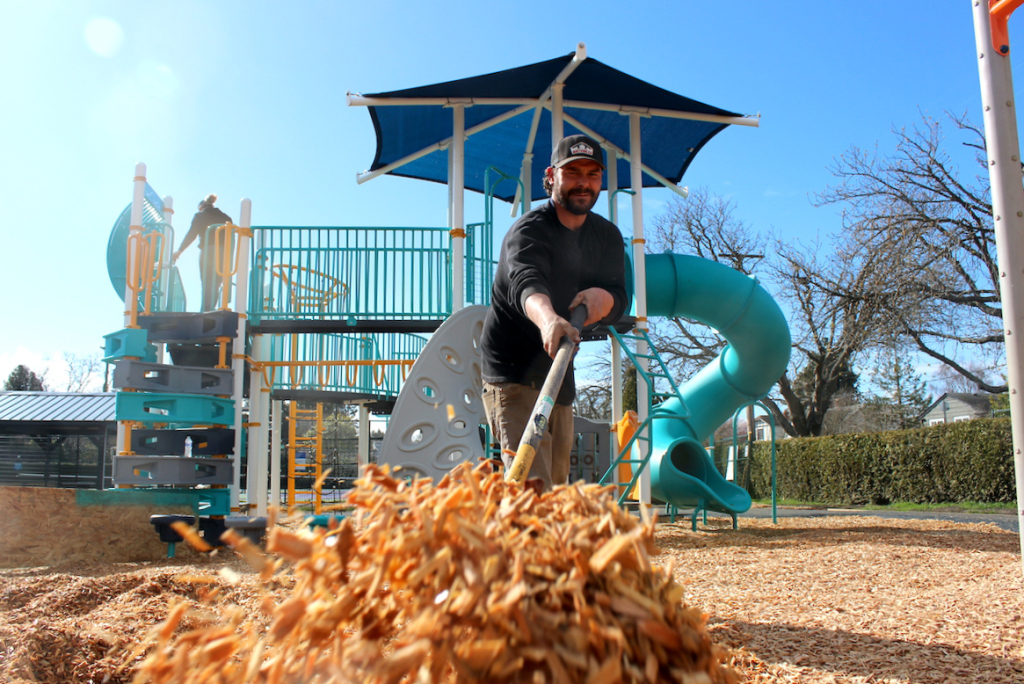
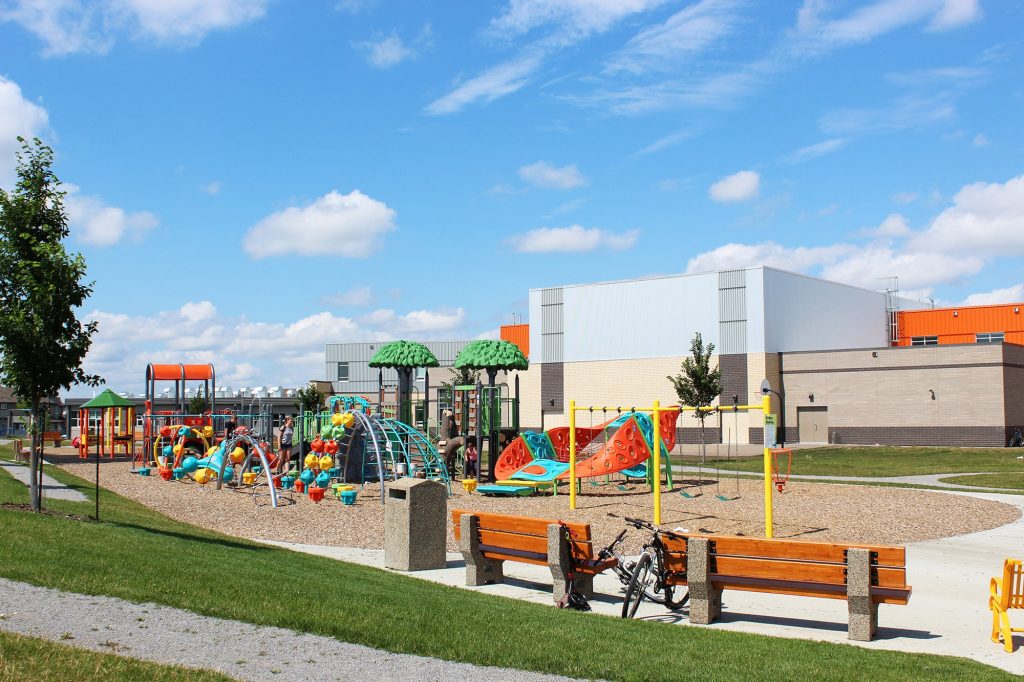
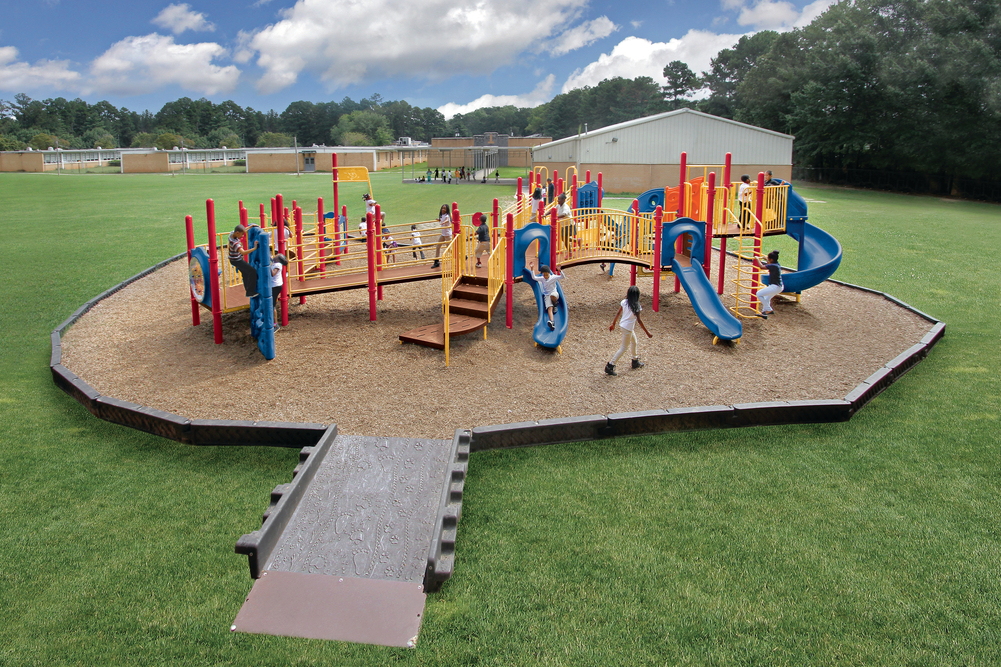
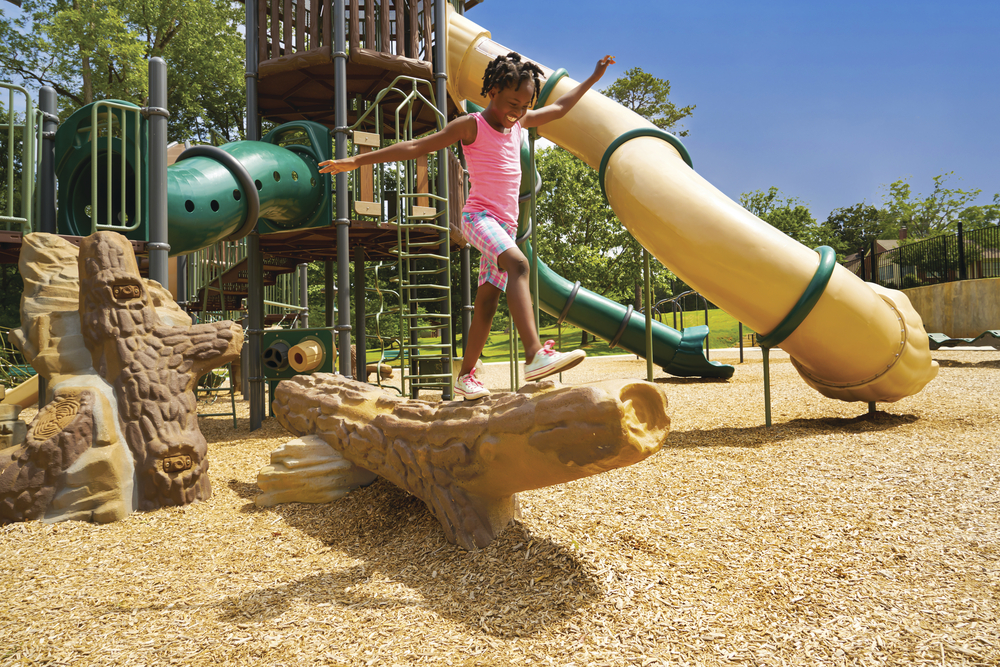
Engineered wood fibre is a purpose-made playground surface, unlike ordinary landscape mulch. It offers dependable fall protection and a natural look at a fraction of the cost of poured rubber. It meets minimum accessibility requirements, but pushing a wheelchair through it is often difficult.
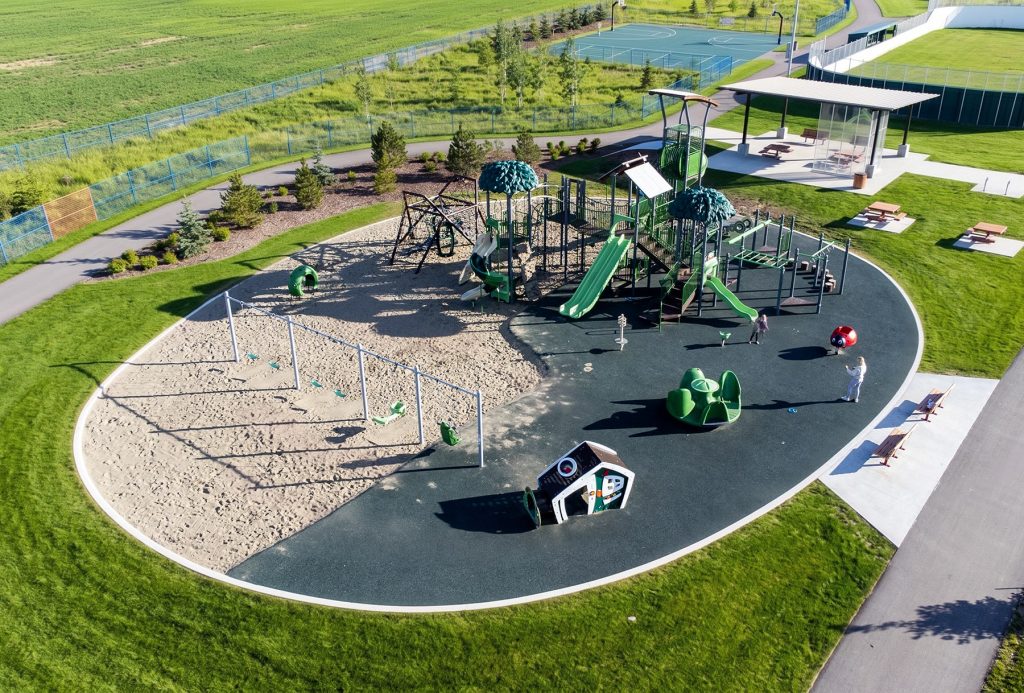
Sand suits natural and beach themes and is one of the least expensive surfaces available. On the other hand, it harbours insects, tracks indoors and does not support wheelchairs, so it works best alongside a unitary surface.
Pea gravel drains well and is economical. Even so, it needs regular raking, and small stones can be a choking risk for younger children.
Every loose-fill surface needs a border to hold it at the correct depth. Wood timbers suit natural themes but need periodic replacement, recycled plastic timbers last longer, and concrete costs the most but stays put permanently.
Which Is the Best Playground Surfacing Material?
There is no single best playground surfacing material, because the right answer depends on your site and the people who will use it. Instead, work through these questions in order:
- What is the tallest fall height? It sets the minimum performance every candidate surface must meet.
- Who will play here? Small loose fill like pea gravel is a poor match for toddler areas.
- Does every child need to reach every activity? If so, a unitary surface needs to cover at least the main routes.
- Who maintains the site? A parks department with weekly crews can keep wood fibre at depth, whereas a volunteer committee or a busy school custodian may not.
- What is your budget horizon? A surface that is cheap in year one can cost more by year ten.
- Where will the snow go? Plan snow storage away from the play area, so plowed snow does not pile up on the surfacing.
Answer those six questions, and the list of playground surfacing options usually narrows to two or three.
Accessibility Narrows Your Playground Surfacing Options
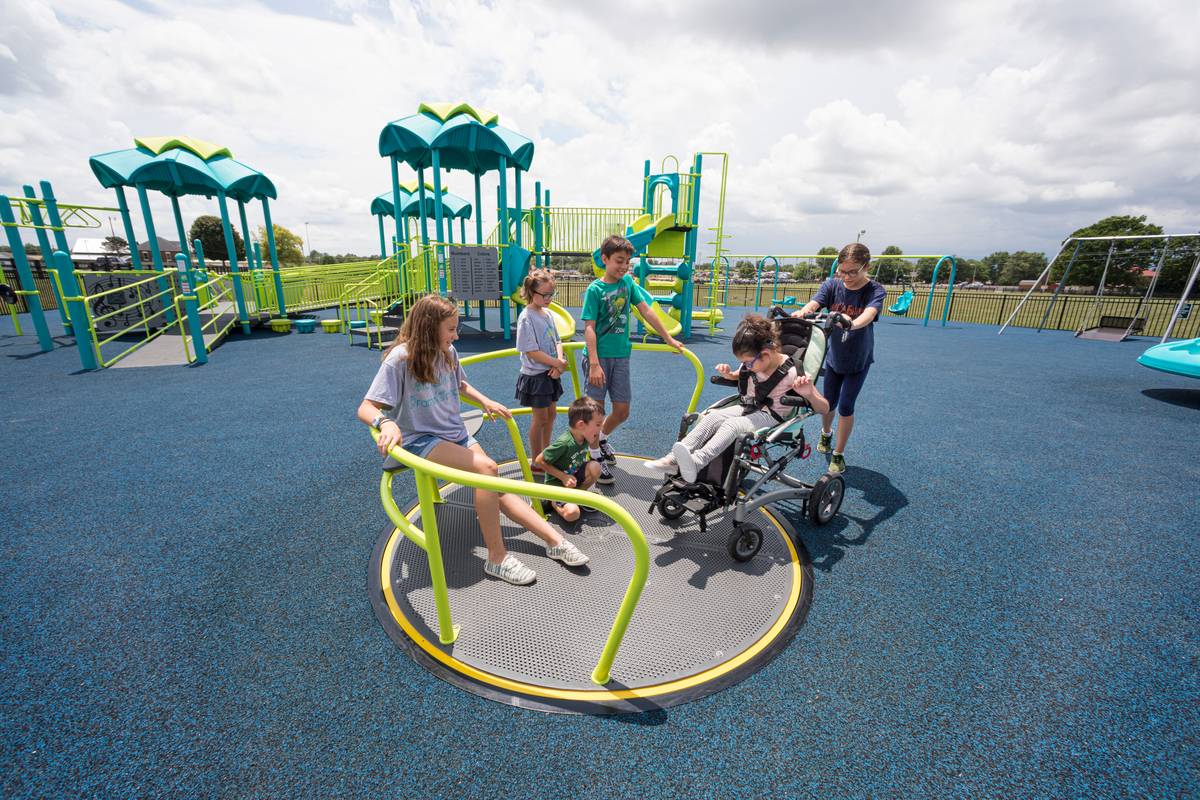
Accessibility is where playground surfacing options differ most. Poured-in-place rubber, rubber tiles and artificial turf give children in wheelchairs and walkers a firm, stable path. Loose fill, by contrast, shifts under a wheel and makes the same trip much harder.
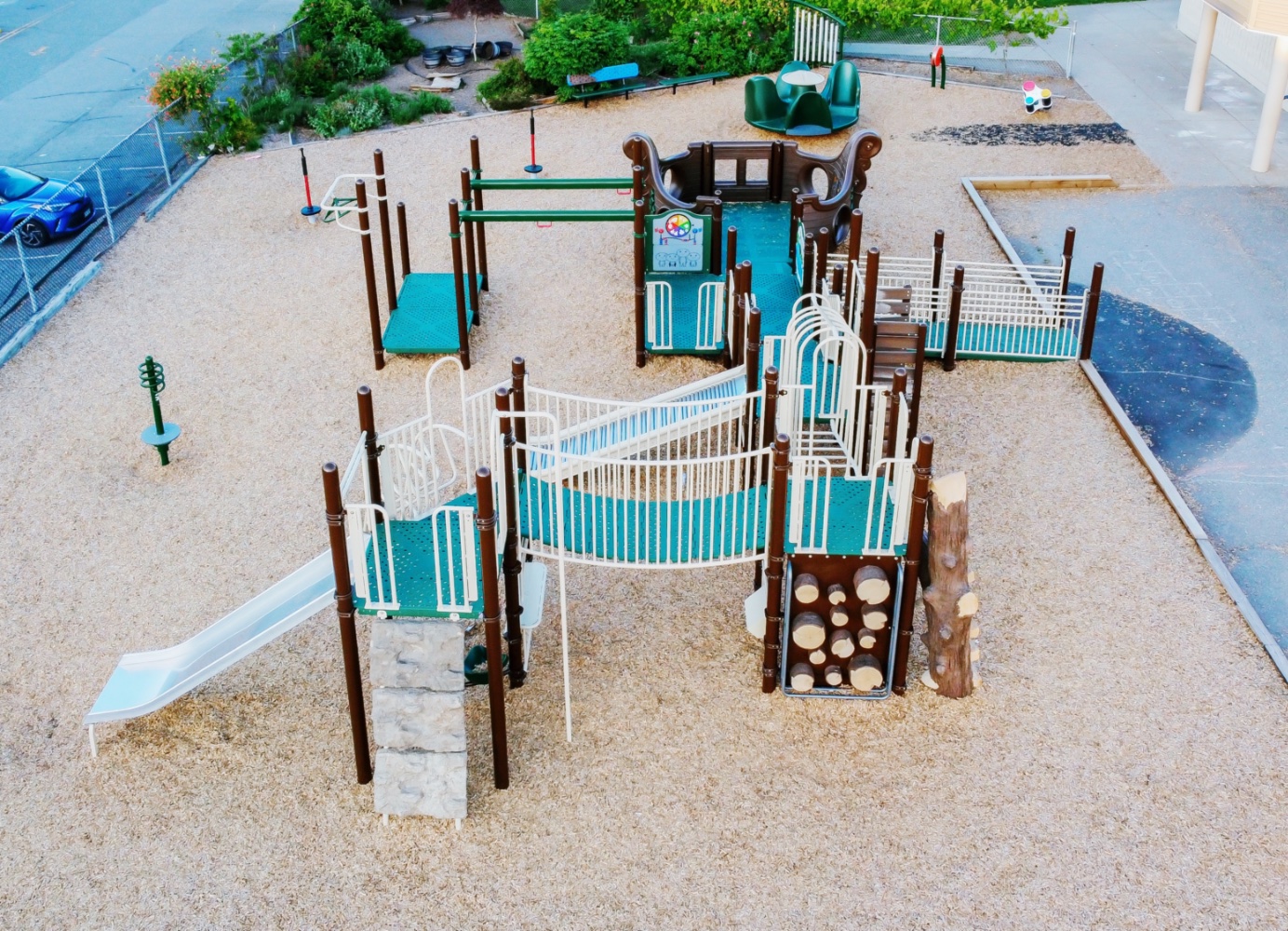
That does not mean loose fill rules out an accessible playground. Many projects pair engineered wood fibre with ramps, transfer stations and ground-level play, then run a unitary path to the equipment that matters most. École Centennial Park Elementary in Abbotsford, BC, is a good example. The playground sits on engineered wood fibre, yet a wheelchair ramp off the main structure provides access to inclusive pieces like a ship glider, roller slide and a variety of sensory panels.
If inclusion is a priority, decide the surfacing at the same time as the equipment. Our inclusive playgrounds page explains how surfacing, ramps and ground-level activities work together.
Comparing Upfront and Lifetime Costs
The cheapest surface to install is rarely the cheapest to own, so compare costs across the life of the playground:
- Poured rubber and turf cost the most upfront and need the least upkeep, although CSA Z614 notes that unitary surfaces lose impact absorption over time and eventually need replacing.
- Engineered wood fibre costs far less upfront, but it needs raking, inspection and regular top-ups to stay at a safe depth.
- Sand and pea gravel are the least expensive playground surfacing options to buy, while their maintenance costs run higher over time.
Although poured rubber has the highest upfront cost, it qualifies for several grants due to its recycled tire content. Our playground grants page lists current programs, such as Kal Tire’s RePlay Fund and the Tire Stewardship BC Community Grant Program.
Mixing Surfaces on One Site
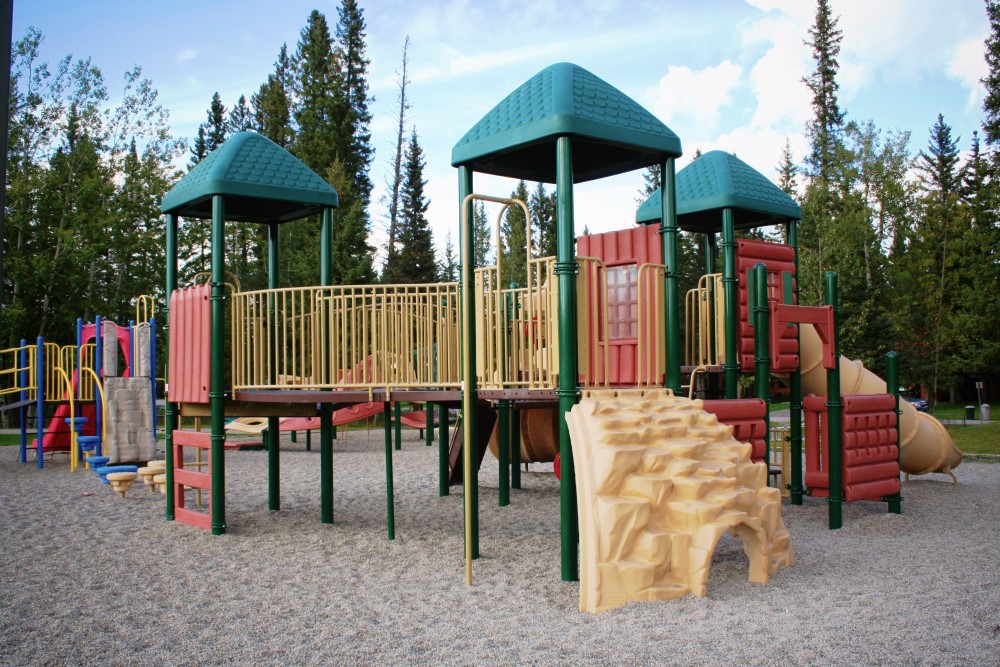
You do not have to choose a single surface. In fact, many of the best playgrounds combine two playground surfacing options to balance cost, access and character.
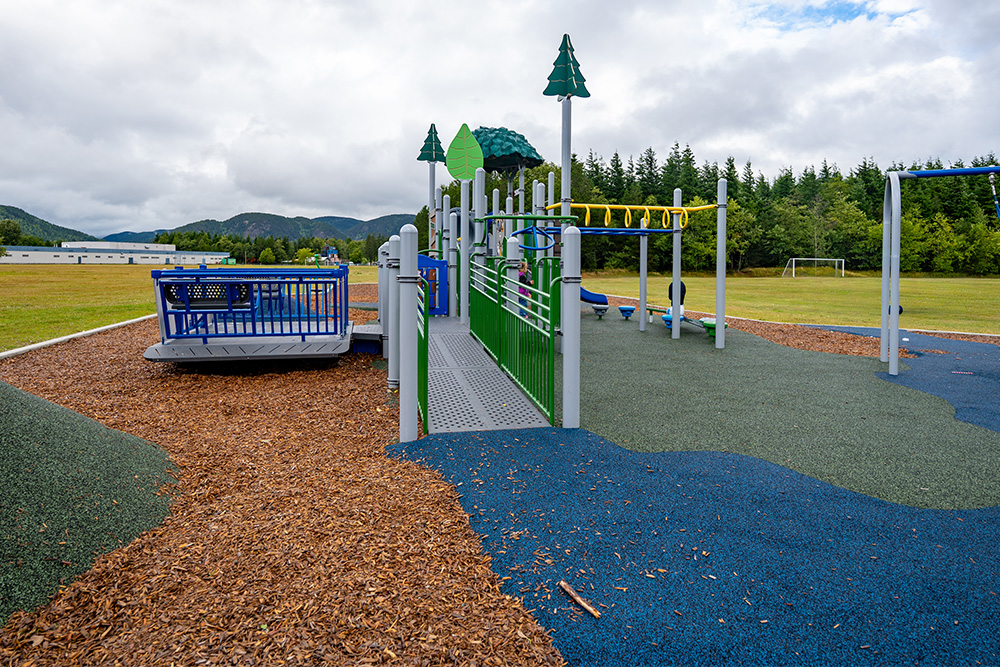
- Rubber where it matters, wood fibre elsewhere. At Pogadl Park in Sylvan Lake, AB, poured rubber provides access to the accessible elements, while engineered wood fibre is reserved for the more challenging components for older kids. That mix controls the budget without cutting anyone out.
- Colour as a design element. Pogadl Park’s blue and tan poured rubber also reflects the town’s lakeside beach.
Whatever the mix, the base underneath matters as much as the surface on top. Drainage, excavation and borders all belong in the plan, which is why we treat surfacing as part of playground installation from the start. Miracle Recreation’s surfacing guide also explains how unitary and loose-fill surfaces differ.
Get a Surfacing Quote for Your Site
Every site starts with a different fall height, user group and maintenance reality, so the best of your playground surfacing options depends on yours. Canadian Recreation Solutions quotes, supplies and installs every surface in this guide, and our protective surfacing page shows each one in more detail.
If you are weighing your playground surfacing options now, get a surfacing quote for your site. We will review your fall heights, accessibility goals and maintenance capacity, then recommend a surface, or a mix of surfaces, that your community can rely on for years. You can also explore our playground design service if you are planning the equipment at the same time.