How Much Does a Commercial Playground Cost in Canada? A 2026 Budget Breakdown
Most commercial playground projects in Canada land between $50,000 and $400,000. The honest answer, though, is that the equipment quote is rarely the number that matters, because surfacing, site work and installation routinely make up half the total commercial playground cost.
That gap is where projects get into trouble. First a council approves a catalogue figure, then finds at tender that drainage, surfacing and installation were never in it.
This breakdown covers what each part actually costs in 2026 Canadian dollars, what drives the range, and the line items that get forgotten too late.
How Much Does a Commercial Playground Cost? The Short Answer
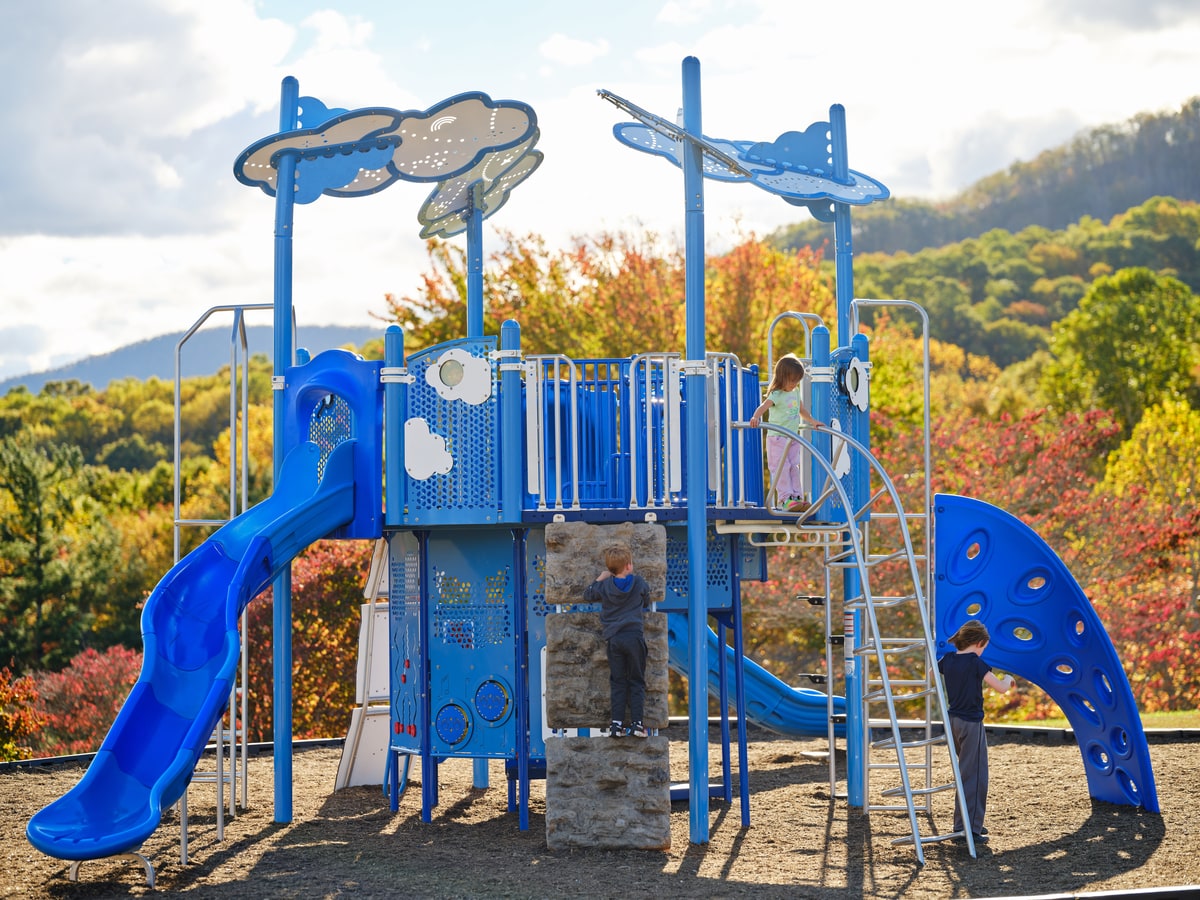
Most buyers want a single number. Until we’ve seen the site, though, nobody can honestly give one — but we can give a bracket. Across the hundreds of playgrounds we’ve installed in Western Canada, most projects land in one of these ranges:
| Project type | Typical range (CAD) |
|---|---|
| Small entry-level play area | $50,000 – $75,000 |
| Community or neighbourhood playground | $75,000 – $200,000 |
| School or larger inclusive space | $200,000 – $400,000 |
| Destination or landmark playground | $400,000+ |
As a rough sanity check, we generally start at about $1,000 per child the space holds at one time. A playground for fifty children at once points toward $50,000 in equipment. Simple, but it catches unrealistic budgets fast.
However, keep in mind that this guideline is for equipment only. As detailed in the next section, protective surfacing, installation labour and site preparation can account for approximately 50% of total costs — depending on the overall playground size.
The Playground Budget Breakdown: Where the Money Goes
On the projects we quote, a commercial playground cost generally divides like this:
| Component | Share of total budget |
|---|---|
| Play equipment | 40 – 50% |
| Protective surfacing | 20 – 30% |
| Installation labour | 15 – 25% |
| Site preparation | 5 – 15% |
The surfacing share surprises people most. Protective surfacing can approach a third of the budget, and your equipment largely locks in the choice, since the tallest play surface sets the fall height, which in turn sets what surfacing you need and how deep it goes.
Installation is the other line that gets underestimated, since it covers far more than assembly. Excavation, concrete, drainage, borders and site restoration all sit here too.
Commercial Playground Equipment Cost by Project Type
Three tiers cover most of what we build, and together they explain most of the spread in commercial playground cost.
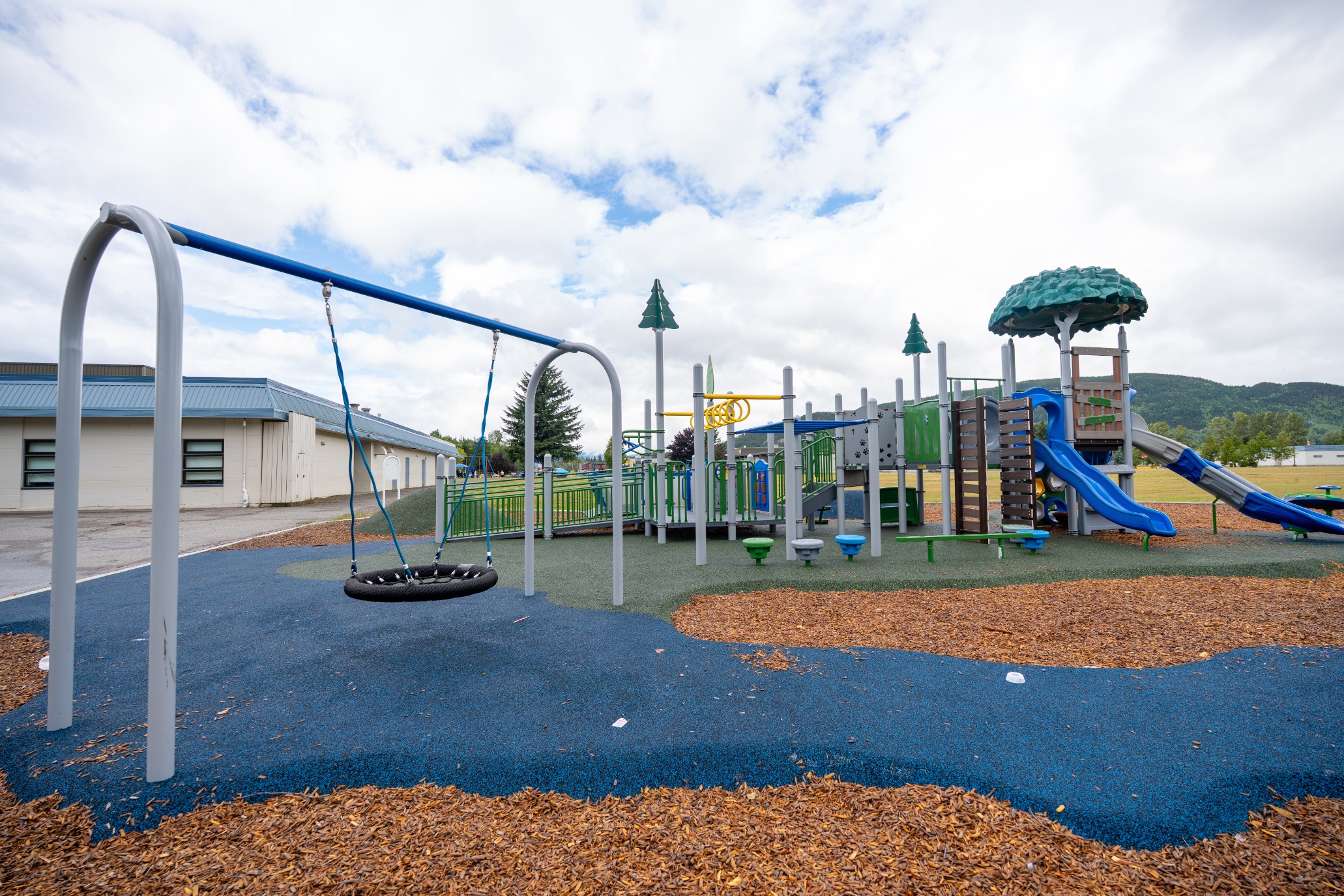
Essential play hub — $50,000 to $200,000. One composite structure with slides and climbers, a swing set, and wood fibre surfacing. Functional and CSA-compliant, though with little room for extras.
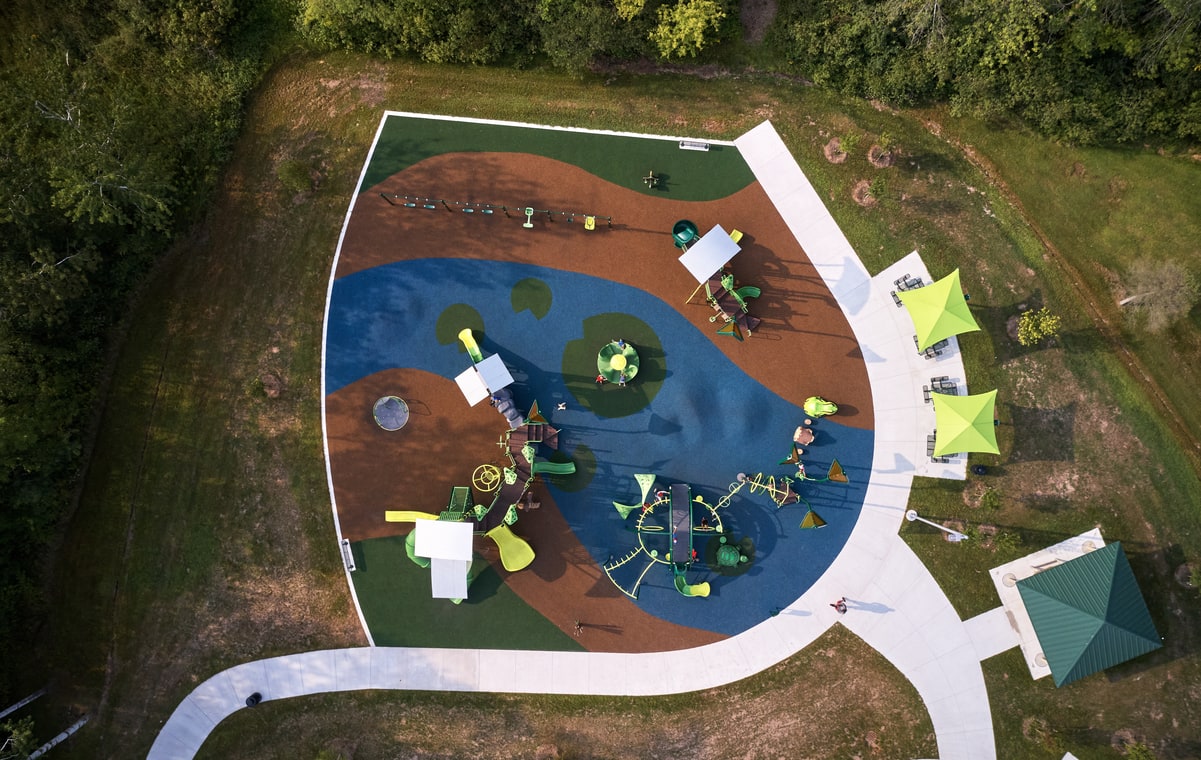
Inclusive community space — $200,000 to $400,000. Here you also get ramped access, ground-level components, unitary surfacing mobility devices can cross, and a wider mix of sensory and challenge levels. Inclusive playgrounds cost more mainly because of surfacing and the larger footprint accessible routes demand, rather than because the equipment is exotic.
Destination playground — $400,000 and up. Now you get custom or themed structures, multiple age zones, shade and seating. Custom and themed playgrounds carry a design premium, but they also draw visitors from well beyond the neighbourhood, which is usually how the business case gets made.
How Much Does a School Playground Cost?
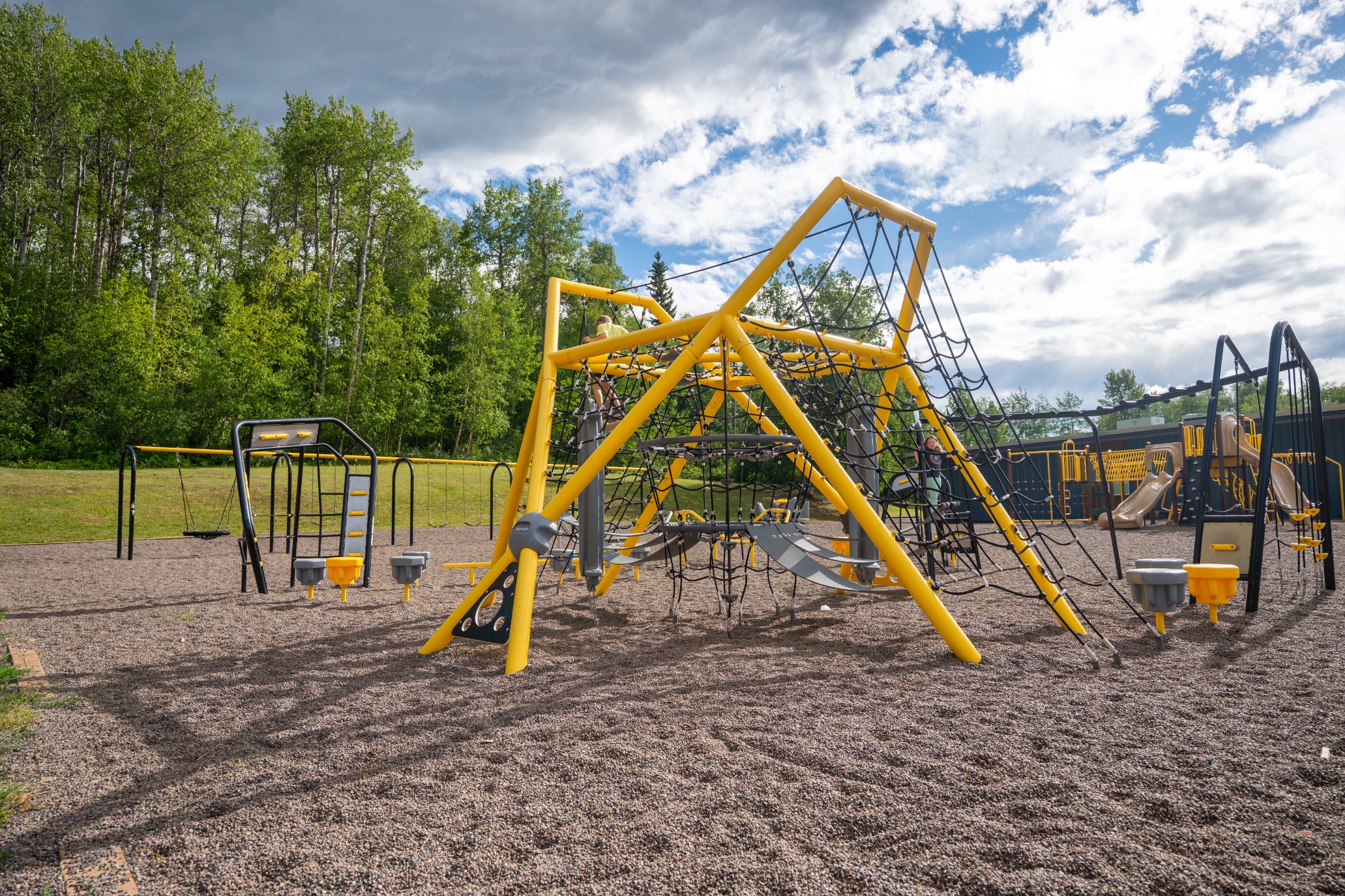
School commercial playground cost clusters in the $200,000 to $400,000 band, though enrolment moves the number most. Apply the per-child guideline against how many students use the space at once, rather than total enrolment, since not every grade is outside together.
Two school-specific pressures matter too. First, separate zones for younger and older students effectively means two smaller playgrounds instead of one, raising the equipment count. Second, school sites often have tight crane and truck access, so installation takes longer.
Most school projects are funded over two or three years from division capital, fundraising and grants. The useful question is rarely the total, but what a fundable first phase costs.
The Hidden Costs of a Playground Project
These are the line items that push the real commercial playground cost past the approved budget:
- Freight and delivery — significant for remote sites, and often quoted separately
- Shade — shelters and shade structures cost far less installed with the playground than retrofitted later
- Site amenities — park furniture such as benches, receptacles and bike racks is almost never in the equipment quote, yet every playground needs it
- Drainage and grading — the most common source of change orders once excavation starts
- Permits and engineering — required for shelters, and easy to miss in scheduling
- Pathways and accessible routes — an accessible playground needs an accessible route, usually concrete and often outside the play area budget
- Surfacing maintenance — loose fill needs topping up on a schedule, so budget it as an operating line rather than a one-time cost
- Grant writing — a professional grant writer typically charges $500 to $2,000 per application
- Contingency — 10% is a reasonable start, and you’ll likely use it
What Drives the Cost to Build a Playground Up or Down
Four decisions account for most of the variance between a $50,000 project and a $400,000 one. Together they also explain why commercial playground cost has no fixed answer.
Site conditions. A flat, well-drained, truck-accessible site is the cheapest thing you can bring to a project. Conversely, slopes, poor drainage, buried utilities and tight access all add cost before a single component goes in.
Surfacing choice. This is the largest single lever available to you. Moving from poured-in-place rubber to engineered wood fibre can shift tens of thousands, at the cost of higher maintenance and less accessibility.
Custom versus catalogue. Custom carries a premium. Even so, it is worth it for destination projects and awkward footprints, while hard to justify for a standard neighbourhood park.
Age range served. Serving 18-month-olds through 12-year-olds properly means separate equipment and use zones for each. Narrowing the age range is a legitimate way to control cost.
How Much Does a Commercial Playground Cost to Maintain?
Purchase price is only part of the number your finance team should see, because a playground is a twenty-year asset with an annual operating cost attached.
Loose-fill surfacing, for example, needs topping up to maintain depth and impact performance, so treat it as a recurring line rather than a one-time purchase. Annual inspections by a certified inspector are a standard operating expense and, in practical terms, liability protection. Replacement parts, hardware and repainting accumulate as the structure ages.
Poured-in-place rubber illustrates the trade-off. Although it costs more upfront than engineered wood fibre, it costs less every year after. Over fifteen years the ranking can reverse, which is why the cheapest quote is not always the cheapest playground.
Closing the Gap Between Budget and Ambition
Almost every project starts with a wish list that outruns funding. Nevertheless, three approaches reliably bring commercial playground cost back into range.
Phase it. Build the core structure now, then add swings, shade and amenities in later budget years. Designing the full layout upfront and installing in stages costs less than redesigning later, and Miracle Recreation’s playground planning resources cover phased builds.
Fund it properly. Substantial funding exists through federal, provincial and foundation programs. CRS maintains a list of playground grants organized by province. Plan around one common condition, though: most grants expect a portion already raised, sometimes up to 50%, while programs like Alberta’s CFEP fund on a matching basis. Little Tikes Commercial and Miracle Recreation both publish funding guides covering donor strategy and leasing.
Use a community build. Volunteer labour under certified supervision cuts installation cost.
Frequently Asked Questions
How much does a commercial playground cost in Canada? Most projects fall between $50,000 and $400,000 in 2026 Canadian dollars. Entry-level areas start near $50,000, while destination playgrounds exceed $400,000.
What percentage of commercial playground cost is equipment? Roughly 40 to 50%. Surfacing takes 20 to 30%, installation labour 15 to 25%, and site preparation 5 to 15%.
How much does a commercial playground cost for a school? Most school projects run $200,000 to $400,000, depending on enrolment and whether separate zones are needed for younger and older students.
Can we build a playground in phases? Yes, and often it’s the smartest route. First design the full layout, then install in stages as funding arrives.
Does the equipment quote include installation? Not always, and this is the most common budgeting mistake we see. Always confirm whether a commercial playground cost is equipment-only or installed, and whether freight, site prep and surfacing are included.
Get a Real Number for Your Site
Every range here is a planning bracket. Ultimately, the only commercial playground cost worth taking to a council is one built from your actual site — grade, drainage, access, age groups and surfacing.
Canadian Recreation Solutions has spent forty years building play spaces across Alberta, BC and Saskatchewan — you can see the results in our completed projects. So if you want a real commercial playground cost for your own site, talk to our team. We’ll walk the site, build a proper budget, and tell you honestly what your funding covers.